
- The auditory cortex connects directly to the periaqueductal gray, the brain’s primary descending pain control center, so the right sound triggers endogenous opioid release.
- Gate control theory (Melzack and Wall, 1965) explains how non-painful sound inputs close neural gates that would otherwise transmit migraine pain signals.
- Journal of Pain research reports structured music listening reduces perceived pain intensity by 20-70% compared to silence.
- Four Solfeggio frequencies map to migraine phases: 396Hz for prodrome, 174Hz and 285Hz for acute pain, and 528Hz for postdrome recovery.
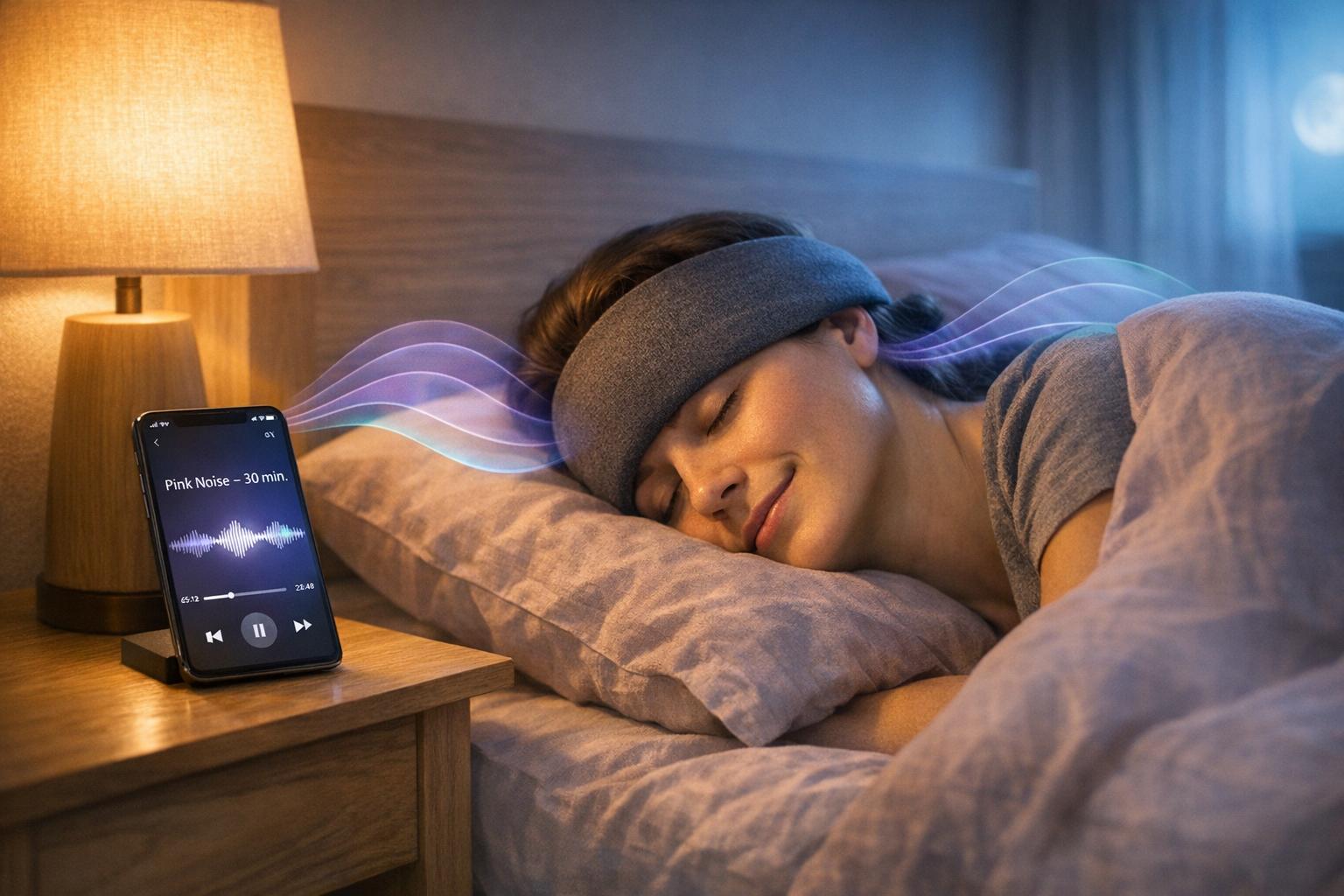
- For acute attacks, listen through stereo headphones at 30-50% volume in a dark room for a minimum of 30 uninterrupted minutes.
- A 2020 Cephalalgia systematic review found non-invasive vagus nerve stimulation, which music achieves via the auricular branch, reduces acute pain and attack frequency.
If you are reading this in the middle of a migraine, or trying to find something — anything — that works before the next one arrives, you are not alone.
How Migraines Affect the Brain and Why Music Works as Relief
Migraine is not just a headache. It is a complex neurological event involving the spreading activation of pain-sensitive neurons across the trigeminal nerve network, a cascade of inflammatory neuropeptides, abnormal cortical spreading depression, and profound dysregulation of the brain's pain processing systems. People who experience migraines frequently describe the pain as crushing, pulsing, or electric — accompanied by nausea, extreme light and sound sensitivity, visual disturbances, and a cognitive fog so severe it renders normal functioning impossible.
What most people do not know is that the same brain that becomes overwhelmed during a migraine is also exquisitely sensitive to sound as a healing input. The auditory cortex, which processes sound, shares rich neural connections with the limbic system (emotions), the hypothalamus (autonomic regulation), and the periaqueductal gray (PAG) — the brain's primary descending pain control center. When the right kind of sound enters the system, it does not just create a pleasant background. It directly activates the PAG, triggers the release of endogenous opioids, and begins dampening the very pain signals that are driving the migraine experience.
The relationship between sound and migraine relief is also rooted in the nervous system's fundamental need for regulation. Migraines are associated with a chronically dysregulated autonomic nervous system — one that oscillates between over-activation and collapse rather than maintaining healthy parasympathetic tone. Slow, gentle, tonally consistent music is one of the most reliable ways to shift the autonomic nervous system from its sympathetic (fight-or-flight) dominant state into the parasympathetic (rest-and-restore) state where healing can occur. For migraine sufferers, this shift is not just calming. It is genuinely therapeutic.
Not all music works equally well. High-tempo music, sharp rhythmic percussion, sudden dynamic shifts, and frequencies that interact with an already-sensitized auditory cortex can all worsen migraine symptoms. The approach to music for migraine relief requires specific choices — choices this guide will make clear in detail.
- Migraine involves trigeminal nerve activation, cortical spreading depression, and neuroinflammation
- The auditory cortex connects directly to the brain's pain control center (periaqueductal gray)
- The right sound activates endogenous opioid release and descending pain inhibition
- Migraines are associated with autonomic nervous system dysregulation
- Gentle, consistent music shifts the nervous system toward parasympathetic (healing) dominance
- Music selection is critical — wrong choices can worsen photosensitivity and sound sensitivity
Music for migraine relief works because sound directly accesses the brain's pain control systems and autonomic regulation pathways — not as distraction, but as genuine neurological intervention.
To understand the full spectrum of how healing frequencies interact with the human body and nervous system, explore our complete guide: Healing Frequencies of the Human Body — The Complete Guide.
The Neuroscience of Music and Pain Relief
The science behind music as a pain intervention has matured substantially over the past two decades. Three mechanisms stand out as particularly relevant for migraine sufferers: gate control theory, dopamine release, and vagus nerve activation.
Gate control theory, first proposed by Ronald Melzack and Patrick Wall in 1965, remains one of the most foundational frameworks in pain neuroscience. The theory describes how the spinal cord and brain contain neural "gates" that can open or close the transmission of pain signals depending on what other inputs are competing for the same pathways. Non-painful sensory inputs — including sound — can effectively close these gates, reducing the amount of pain signal that reaches conscious awareness. When music reaches the auditory cortex, it creates a rich stream of non-nociceptive (non-pain) neural input that competes with and suppresses migraine pain signals traveling through the trigeminal pathways.
Dopamine is the neurotransmitter most closely associated with pleasure, reward, and motivational drive — but it also plays a critical role in pain modulation. Research by Dr. Stefan Koelsch at the Free University of Berlin has demonstrated that music capable of producing strong emotional responses triggers significant dopamine release in the nucleus accumbens and striatum. This dopamine surge does not just produce a sense of pleasure; it directly activates the brain's descending inhibitory pain control system, reducing pain perception through the same pathways engaged by opioid analgesics. For migraine sufferers, carefully chosen music that produces genuine emotional resonance can trigger a measurable, neurologically real reduction in pain intensity.
Vagus nerve activation may be the most clinically significant mechanism of all. The vagus nerve — the longest cranial nerve in the body — is the primary channel through which the brain communicates with the heart, lungs, gut, and immune system, and through which parasympathetic regulation flows. Research published in journals including Frontiers in Neuroscience has shown that specific auditory frequencies and musical patterns activate the vagus nerve directly through the auricular branch that runs through the outer ear. When vagal tone is increased, inflammatory markers drop, heart rate variability improves, pain sensitivity decreases, and the neurological hypersensitivity that drives migraine escalates toward resolution. The Journal of Pain research on music analgesia has consistently shown that structured music listening reduces perceived pain intensity by 20-70% compared to silence or control conditions.
- Gate control theory: non-painful sound inputs close neural gates to migraine pain signals
- Dr. Stefan Koelsch's research: emotionally resonant music triggers dopamine release that activates descending pain inhibition
- Dopamine from music engages the same analgesic pathways as opioid medications
- Vagus nerve activation through the auricular branch reduces inflammation and pain sensitivity
- Increased vagal tone decreases neurological hypersensitivity — a core driver of migraine
- Journal of Pain research: structured music listening reduces pain intensity by 20-70% vs. silence
- Cleveland Clinic recognizes music therapy as an evidence-based complementary intervention for headache disorders
The Best Types of Music for Migraine Relief
Not every genre or style of music offers migraine relief. The characteristics of the music matter enormously — and for someone in the acute phase of a migraine attack, choosing the wrong type can intensify symptoms rather than ease them. Research and clinical practice converge on several consistent principles for what makes music therapeutically effective for migraine.
Tempo is perhaps the most critical variable. Music between 60 and 80 beats per minute most effectively synchronizes with the resting heart rate, encouraging the autonomic nervous system toward parasympathetic dominance. This tempo range is also associated with alpha brainwave entrainment — the relaxed, clear state where the cortical hyperexcitability of migraine naturally quiets. Music above 100 BPM tends to activate the sympathetic nervous system, increase physiological arousal, and worsen photosensitivity and pain — the opposite of what is needed.
Percussion should be minimized or entirely absent. The sharp transient spikes of drum hits and percussive instruments create sudden neural activation events that a sensitized migraine brain interprets as additional threat signals. Sustained tones — strings, pads, singing bowls, gentle piano, flute — provide continuous, predictable neural input that supports regulation rather than agitation.
432Hz tuning is consistently preferred over standard 440Hz tuning by researchers and practitioners working with therapeutic sound. The theoretical basis is that 432Hz aligns more closely with natural harmonic ratios found in nature and in the human body's physiological frequencies. While direct clinical comparison studies are limited, anecdotal evidence from sound healing practitioners and a growing body of preliminary research suggests that music tuned to 432Hz produces noticeably less cortical tension and more pronounced relaxation responses than the same music in standard 440Hz.
Binaural beats in the delta (0.5-4 Hz) and theta (4-8 Hz) ranges are particularly valuable for migraine relief. These beats work by presenting slightly different frequencies to each ear, causing the brain to generate a third frequency equal to the difference — effectively entraining brainwave activity toward the delta and theta states associated with deep rest, pain relief, and reduced cortical excitability. A migraine brain running in overdrive is dramatically calmer after even 20 minutes of delta or theta binaural beat entrainment. These must be listened to through stereo headphones to be effective.
Nature sounds — specifically flowing water, gentle rain, forest ambience, and ocean waves at low amplitude — provide a rich, organically complex sound environment that the brain processes as safe and soothing. The irregular but predictable patterns of natural sounds prevent the auditory cortex from alerting to unexpected inputs while maintaining the continuous non-nociceptive input stream that supports gate control pain reduction. Many of the most effective migraine relief compositions combine nature sounds with instrumental layers tuned to therapeutic frequencies.
- 60-80 BPM tempo: matches resting heart rate, encourages parasympathetic nervous system dominance
- No percussion: sustained tones (strings, bowls, pads, piano) avoid sharp neural activation spikes
- 432Hz tuning: produces less cortical tension and more pronounced relaxation than standard 440Hz
- Binaural beats delta/theta (0.5-8 Hz): entrain brainwaves toward deep rest and reduced pain sensitivity
- Nature sounds: flowing water, gentle rain, forest ambience — safe, predictable, non-agitating
- No lyrics: words engage the language cortex and increase cognitive load during an already-taxed migraine brain
- Low, consistent volume: sudden dynamic shifts activate the startle response and worsen photophobia
The best music for migraine relief is slow, percussion-free, tuned to 432Hz, played at consistent low volume, and combines sustained tonal layers with optional binaural beats and nature sounds.
Healing Solfeggio Frequencies for Migraine Relief
Within the broader category of therapeutic sound, Solfeggio frequencies occupy a special place for migraine relief. These ancient tones — rediscovered and documented by Dr. Joseph Puleo and later popularized through the work of independent researchers — each correspond to specific healing functions in the body and nervous system. Four frequencies are especially relevant for migraine sufferers.
174Hz is known as the frequency of pain relief and anesthetic effect. It is the lowest of the primary Solfeggio tones, and it works on the physical body at the most foundational level — reducing the perception of pain, creating a sense of security in the nervous system, and lowering the defensive activation that keeps a migraine brain in high alert. Listening to music centered around 174Hz during the early stages of a migraine attack can meaningfully reduce how intense the pain escalates. It gives the nervous system permission to soften rather than brace against the incoming pain wave.
285Hz is associated with tissue healing and cellular regeneration. Where 174Hz works on pain perception, 285Hz works on the tissue-level inflammation and neural irritation that generates migraine pain signals in the first place. The frequency is believed to support the restoration of damaged or irritated tissues toward their natural energetic blueprint — reducing the neuroinflammatory cascade that characterizes severe migraine events. Many practitioners combine 285Hz and 174Hz in sequence for maximum physical pain relief.
396Hz is the Solfeggio frequency of liberation from fear and tension. Migraine is almost always accompanied by — and often triggered by — an undercurrent of unresolved tension, anxiety, and stress that dysregulates the autonomic nervous system. 396Hz targets this emotional and energetic layer directly, dissolving the stored tension that holds the nervous system in a primed, hyperreactive state. Regular listening to 396Hz can reduce the baseline of nervous system reactivity that makes migraine attacks more frequent and more severe — addressing the root condition rather than just the symptom.
528Hz, known as the Love frequency and the Miracle tone, is associated with DNA repair, cellular healing, and the restoration of harmonic coherence throughout the body's energy system. For migraine sufferers, 528Hz works on the systemic level — supporting the body's natural repair processes in the aftermath of an attack, reducing recovery time, and progressively restoring the coherence and resilience of a nervous system that has been repeatedly stressed by chronic migraine. Many practitioners report that consistent 528Hz listening over weeks and months contributes to a reduction in migraine frequency, not just severity.
- 174Hz: Pain relief frequency — reduces pain perception and lowers defensive nervous system activation
- 285Hz: Tissue healing frequency — addresses neuroinflammation and cellular irritation at the source
- 396Hz: Tension release frequency — dissolves stored stress and autonomic nervous system dysregulation
- 528Hz: Repair frequency — supports systemic cellular healing and long-term migraine frequency reduction
- Combining frequencies in sequence (174Hz → 285Hz → 396Hz → 528Hz) creates a complete therapeutic protocol
- All four frequencies work most effectively at low volume through quality headphones
- Regular exposure over 2-4 weeks produces cumulative reduction in migraine baseline reactivity
How to Use Music During a Migraine Attack: Step-by-Step Protocol
Knowing which music helps is only part of the picture. How you use it during an actual attack determines whether you get meaningful relief or, in the worst case, worsen your photosensitivity and sound sensitivity. The following protocol is drawn from clinical music therapy practice, neurological research, and the practical experience of migraine sufferers who have developed effective sound-based interventions.
Step one: create a dark, quiet environment before pressing play. Close blinds or curtains fully. Remove any sources of flickering or bright light. If you have an eye mask, use it. The goal is to reduce all sensory input to the minimum before introducing the therapeutic sound input. A dark room signals safety to the nervous system and reduces the sensory competition that can prevent music from reaching its target pathways effectively.
Step two: use high-quality stereo headphones at low volume. This is non-negotiable for binaural beats to function, and it substantially improves the therapeutic effect of all frequency-based music. The target volume is the lowest level at which you can hear the music clearly — typically 30-50% of maximum volume. If the sound feels intrusive or sharp, reduce it further. A migraine brain that is already in auditory hypersensitivity needs to be eased in gently, not flooded.
Step three: choose your starting frequency based on attack phase. In the early prodrome or aura phase, begin with 396Hz to interrupt the nervous system activation before it escalates. In the acute pain phase, start with 174Hz for immediate pain modulation, followed by 285Hz for tissue-level relief. In the postdrome (recovery) phase, 528Hz is most appropriate for cellular restoration and fatigue reduction.
Step four: lie down in a supported position that reduces neck and shoulder tension. The head, neck, and shoulders carry enormous tension during migraines, and that tension feeds back into the trigeminal nerve activation cycle. Lying on your back with a supportive pillow or side-lying with a pillow between your knees relieves this tension and allows the music to work without constant muscular interference.
Step five: listen for a minimum of 30 minutes without interruption. Pain relief through music is not immediate in the way that medication can be. It works through accumulation — progressively shifting the nervous system state over time. The first 10 minutes are often the hardest, when the migraine brain resists relaxation. After 20-30 minutes of uninterrupted listening, most people report a measurable shift in pain intensity, emotional distress, and physical tension. Allowing the session to extend to 60 minutes or more amplifies the relief significantly.
- Dark room first: reduce all visual and ambient sensory input before introducing sound
- Stereo headphones at low volume: 30-50% of maximum — gentle introduction, not immersion by force
- Match frequency to phase: 396Hz (prodrome), 174Hz + 285Hz (acute pain), 528Hz (postdrome)
- Lying position: back or side-lying with support to release neck and shoulder tension
- Minimum 30 minutes: pain relief accumulates over time — the first 10 minutes are hardest
- Extend to 60+ minutes when possible for significantly deeper relief
- Avoid talking, screens, or checking the phone during the session — full rest amplifies the effect
The migraine music protocol is not passive background listening. It is a deliberate, structured intervention that requires the right environment, the right equipment, and the right duration to produce real neurological relief.
Using Music to Prevent Migraines: Daily Listening Routine
Some of the most powerful benefits of music for migraine relief come not during an attack, but in the days and weeks between attacks. Migraine is fundamentally a condition of nervous system dysregulation — and daily therapeutic music listening is one of the most effective non-pharmaceutical tools available for progressively restoring the autonomic balance and reducing the brain's chronic hyperexcitability that makes attacks more frequent.
The preventive protocol begins with consistency. A daily practice of 20-30 minutes of therapeutic music — whether Solfeggio frequencies, binaural beats, 432Hz instrumental, or nature sound compositions — gradually builds what researchers call increased vagal tone. Higher vagal tone is associated with lower resting levels of inflammation, better heart rate variability, more resilient stress responses, and a nervous system that returns to baseline more quickly after activation. All of these factors directly reduce migraine frequency.
Morning listening immediately after waking is one of the highest-leverage windows. During the hypnopompic transition from sleep to waking, the brain is in a highly receptive theta state that makes it particularly responsive to frequency entrainment. A 20-minute 432Hz or theta binaural beat session during this window sets the nervous system's tone for the entire day — establishing a parasympathetic baseline that is much harder for stress triggers to disrupt.
Evening listening serves a different but equally important function: completing the stress response cycle before sleep. Stress that is not discharged before sleep drives the chronic sympathetic activation that degrades sleep quality, reduces restorative slow-wave sleep, and increases the likelihood of a morning migraine triggered by poor sleep and elevated cortisol. Thirty minutes of 528Hz or delta binaural beats in the hour before sleep addresses this directly — facilitating full nervous system downregulation, deeper sleep architecture, and a neurological reset that reduces the next day's migraine vulnerability.
Over 4-8 weeks of consistent daily practice, most dedicated practitioners report a meaningful reduction in migraine frequency — not just in how severe attacks are when they occur, but in how often they occur in the first place. This is not a fast fix. It is the slow, steady restoration of a nervous system that has been dysregulated for months or years. The music does not cure migraine. It restores the conditions under which the body and brain can regulate themselves back toward resilience.
- Daily 20-30 minute sessions progressively rebuild vagal tone and autonomic resilience
- Higher vagal tone reduces baseline inflammation, stress reactivity, and migraine frequency
- Morning session (theta/432Hz): sets parasympathetic tone for the full day
- Evening session (528Hz/delta binaural): completes the stress cycle and supports deep restorative sleep
- 4-8 weeks of consistency produces measurable reduction in migraine frequency for most practitioners
- The goal is not just managing attacks — it is restoring the nervous system conditions that reduce their occurrence
- Combine with other known migraine preventive measures: hydration, consistent sleep schedule, stress management
What to Avoid: Music That Triggers or Worsens Migraines
Understanding what not to play during a migraine is just as important as knowing what to play. The auditory hypersensitivity (phonophobia) that accompanies most migraine attacks means the wrong music is not simply unhelpful — it can actively worsen pain, trigger nausea, and extend the duration of an attack.
High BPM music is the most common problematic category. Anything above 100 beats per minute activates the sympathetic nervous system through rhythmic entrainment, driving heart rate and physiological arousal upward at exactly the moment when downregulation is needed. Many migraine sufferers instinctively reach for familiar, beloved music as comfort — but if that music has an energetic tempo, the rhythmic drive will compete with and potentially override any soothing effect.
Sudden volume changes are particularly harmful. The startle reflex — which is hyperactivated during migraines — responds to unexpected loud sounds with a sharp spike of cortisol and adrenaline. Music with dramatic dynamic contrasts, drum fills, or sudden orchestral crescendos triggers this reflex repeatedly, keeping the nervous system in a state of defensive readiness that is completely incompatible with pain relief. This eliminates most classical music from the therapeutic category despite its general relaxation reputation — many classical pieces contain exactly the kind of dynamic variation that worsens migraine.
Lyrics are almost universally problematic during an acute attack. The language cortex — Wernicke's area and Broca's area — requires active cognitive processing to decode words, even unconsciously. This cognitive load is significant for a brain already under metabolic stress from a migraine. The mental effort of processing language, combined with the emotional content of lyrics, maintains a level of cortical engagement that prevents the deep downregulation needed for pain relief.
Certain frequency ranges can interact badly with migraine photosensitivity and sound sensitivity. High-pitched tones above 2000Hz, bright or metallic timbres, and aggressive use of reverb and compression in production can all amplify the sensory overload of a migraine brain. The safest sonic territory for migraine relief is in the lower and mid frequency ranges — below 1000Hz — with clean, uncompressed production that avoids the harsh digital artifacts common in pop and electronic music production.
- High BPM (above 100): activates sympathetic nervous system and increases physiological arousal
- Sudden volume changes: trigger the startle reflex, spiking cortisol and adrenaline
- Dramatic dynamic contrasts: most classical music is disqualified despite its relaxation reputation
- Lyrics: require active language cortex processing that prevents deep downregulation
- High-pitched tones above 2000Hz: amplify the auditory hypersensitivity of migraine
- Harsh reverb and compression: bright, metallic digital sound artifacts worsen sound sensitivity
- Familiar energetic favorites: emotional comfort cannot overcome a high-energy rhythmic drive
During a migraine, more silence is always better than the wrong music. If nothing available feels right, plain silence in a dark room is preferable to music that activates rather than calms.
Migraine Music Therapy Research: What the Science Says
The evidence base for music as a therapeutic intervention in pain conditions, including migraine and headache disorders, has grown substantially over the past fifteen years. While large-scale randomized controlled trials specific to migraine are still emerging, the mechanistic research and smaller clinical studies paint a consistent and compelling picture.
Dr. Stefan Koelsch's work at the Free University of Berlin, published in journals including Nature Reviews Neuroscience, has established the neural architecture through which music modulates pain. His research demonstrates that music activates the nucleus accumbens, amygdala, hippocampus, and prefrontal cortex simultaneously — engaging the entire limbic-cortical system in a way that creates measurable analgesic effects. Koelsch has specifically documented how music-induced dopamine release engages the same descending pain inhibitory pathways that opioid medications target, providing a neurobiological basis for why emotionally resonant music produces genuine pain reduction.
The Cleveland Clinic recognizes music therapy as an evidence-based complementary intervention for headache and migraine, noting its particular value for patients seeking non-pharmaceutical options or complementary approaches alongside medication. Their clinical guidance emphasizes slow tempo, minor keys or simple harmonic structures, and consistent volume as the defining characteristics of effective migraine-relief music — consistent with the recommendations detailed throughout this guide.
Research on vagus nerve stimulation for migraine is among the most clinically exciting areas in headache medicine. A 2020 systematic review in the journal Cephalalgia documented that non-invasive vagal nerve stimulation produces significant reductions in both acute migraine pain and in long-term attack frequency. Given that music reliably activates the vagus nerve through the auricular branch, structured music therapy represents a readily accessible form of vagal stimulation that does not require clinical intervention.
Neurologic music therapy (NMT), a formal clinical discipline developed at Colorado State University by Dr. Michael Thaut, provides perhaps the most rigorous framework for understanding music as a neurological intervention. NMT techniques have demonstrated efficacy across a range of neurological conditions including traumatic brain injury, stroke, and chronic pain — with its principles directly applicable to migraine. The discipline's emphasis on entrainment (synchronizing brainwave and physiological rhythms to musical tempo and frequency) aligns precisely with the therapeutic mechanisms described throughout this guide.
- Dr. Stefan Koelsch (Free University of Berlin): music activates full limbic-cortical system and triggers analgesic dopamine release
- Music-induced dopamine release engages the same descending pain inhibition pathways as opioid medications
- Cleveland Clinic recognizes music therapy as evidence-based complementary care for migraine and headache
- Cephalalgia 2020 systematic review: vagus nerve stimulation significantly reduces acute migraine pain and attack frequency
- Music activates the vagus nerve through the auricular branch — accessible, non-invasive vagal stimulation
- Neurologic Music Therapy (Dr. Michael Thaut, Colorado State University): formal clinical discipline with pain applications
- Gate control theory (Melzack & Wall, 1965): auditory input closes spinal and thalamic pain gates — foundational mechanism
Frequently Asked Questions About Music for Migraine Relief
Does music help migraines?
Yes — music can help migraines through several well-documented neurological mechanisms. Specific types of music activate the brain's descending pain control system (periaqueductal gray), trigger dopamine release that inhibits pain signals, increase vagal tone to reduce neuroinflammation, and shift the autonomic nervous system from sympathetic overdrive into parasympathetic regulation. The key is choosing the right music: slow tempo (60-80 BPM), no percussion, no lyrics, low and consistent volume, and ideally tuned to 432Hz or incorporating binaural beats in the delta/theta range. Research including Journal of Pain meta-analyses reports that structured music listening reduces pain perception by 20-70% compared to silence.
What is the best music for migraine relief?
The best music for migraine relief has four defining characteristics: slow tempo (60-80 BPM), no percussion or sudden volume changes, sustained instrumental tones (singing bowls, strings, gentle piano, ambient pads), and no lyrics. Within these parameters, the most effective options include: Solfeggio frequency compositions centered on 174Hz (pain relief) and 285Hz (tissue healing), binaural beats in the delta (0.5-4 Hz) or theta (4-8 Hz) range played through stereo headphones, music tuned to 432Hz, and nature sound compositions featuring gentle flowing water or rain at low amplitude. The playlist and videos embedded in this post represent carefully curated examples of these characteristics.
What frequency helps migraines?
Four Solfeggio frequencies are most effective for migraine relief. 174Hz is the pain relief frequency — it reduces pain perception and calms defensive nervous system activation, making it ideal for the acute pain phase. 285Hz targets tissue healing and neuroinflammation — addressing the cellular irritation that generates migraine pain signals. 396Hz releases the tension and stored stress that chronically dysregulate the autonomic nervous system and increase migraine frequency. 528Hz, the repair frequency, supports systemic healing and is ideal for recovery and prevention. Binaural beats in the delta range (1-3 Hz) and theta range (4-7 Hz) are also highly effective — they entrain the brain away from the cortical hyperexcitability that characterizes migraine.
Can binaural beats help with migraine relief?
Yes, binaural beats can provide meaningful migraine relief, though they are not a cure. Delta (0.5-4 Hz) and theta (4-8 Hz) binaural beats work by entraining the brain toward the deep rest states where cortical hyperexcitability — a core feature of migraine — naturally reduces. This means the same neural overactivation that drives migraine pain gradually quiets with sustained binaural beat exposure. The essential requirement is stereo headphones: binaural beats require different frequencies to be delivered to each ear simultaneously, which speaker systems cannot achieve. Most people experience noticeable pain reduction after 20-30 minutes of delta binaural beat listening in a dark, quiet environment.
How long should I listen to music during a migraine?
A minimum of 30 minutes of uninterrupted listening is recommended for meaningful pain relief during an acute migraine attack. This is because therapeutic music works through accumulation — progressively shifting the nervous system state rather than producing immediate relief like medication. The first 10-15 minutes are often the most difficult, as a migraine brain resists relaxation. After 20-30 minutes, most people report a measurable reduction in pain intensity and emotional distress. Extending to 60 minutes or more significantly amplifies the effect. For maximum benefit, begin listening during the prodrome or aura phase if possible — before pain reaches its peak — when the nervous system is more receptive to entrainment.
Is music better than medication for migraine?
Music therapy and migraine medications serve different roles and are most effective when used together rather than in opposition. Medications like triptans provide faster relief during acute attacks and are essential for many migraine sufferers. Music therapy is most valuable as a complementary intervention — amplifying the effect of medication, reducing how much medication is needed, and providing relief during the periods when medication cannot be taken or is insufficient. More importantly, daily therapeutic music listening builds long-term autonomic resilience and reduces migraine frequency in ways that most acute medications cannot. Music therapy is also entirely free of side effects, completely accessible, and can be used as often as needed without tolerance or dependency concerns.
Can music prevent migraines?
Yes — consistent daily therapeutic music listening can reduce migraine frequency over time, though it requires weeks of regular practice to produce preventive effects. The mechanism is progressive restoration of autonomic nervous system balance: daily 20-30 minute sessions of 432Hz music, binaural beats, or Solfeggio frequencies gradually build vagal tone, reduce resting inflammation, improve stress resilience, and lower the chronic cortical hyperexcitability that predisposes the brain to migraine attacks. Most practitioners who commit to a daily listening routine report meaningful reductions in attack frequency after 4-8 weeks. The preventive effect is cumulative — each session builds on the last, and the benefits are most pronounced with consistent daily practice rather than occasional use.
Start Using Music for Migraine Relief Today
Migraine is one of the most disabling conditions a person can experience — and it is one that medicine has still not fully solved. For the billions of people who live with migraine, the search for relief is constant, urgent, and deeply personal. Music for migraine relief will not replace every medication, and it will not stop every attack. But it offers something that no pill can: a way to work with the nervous system rather than against it. To use the brain's own pain modulation pathways, its own capacity for regulation, its own innate responsiveness to healing sound. Start with the playlist and the videos in this guide. Build a daily listening routine. Be patient with the process. The nervous system that has been dysregulated by years of chronic migraine does not restore overnight — but it does restore. One session at a time, one quiet room at a time, one frequency at a time, the brain remembers how to be calm. And in that calm, healing becomes possible.
Discover the complete library of healing frequencies, Solfeggio playlists, and sound therapy guides at Miracle Frequencies — everything you need to build a daily frequency practice that supports nervous system health and reduces migraine vulnerability.
Follow Miracle Frequencies on Spotify, Apple Music, and YouTube for new healing frequency releases every week — including migraine relief playlists, sleep frequencies, and Solfeggio therapy sessions. Join over one million listeners building daily sound healing practices. Your nervous system deserves rest. Give it the frequencies it needs to heal.
Listen while you read
Music for Massage — Treatment-table sound that lowers pain perception. Streams free in your browser, no app, no sign-up.