Om Mani Padme Hum
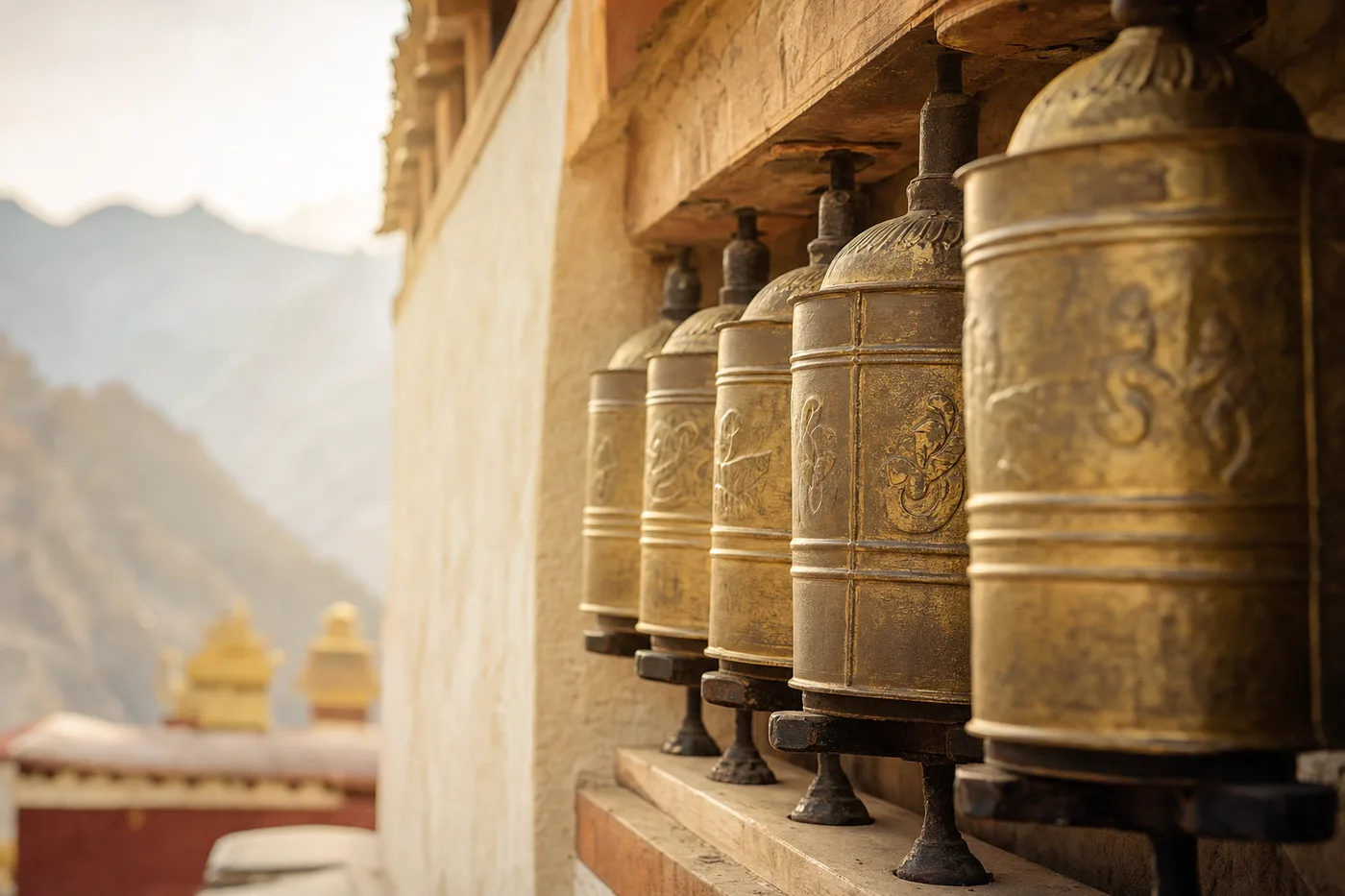
Om Mani Padme Hum is the most widely recited mantra in Tibetan Buddhism — carved into stones on Himalayan trails, spun inside millions of prayer wheels, and whispered on malas for over a thousand years.
It is the mantra of Avalokiteshvara, the bodhisattva of compassion, and Tibetans treat its six syllables as a complete teaching: the path from an ordinary, scattered mind to a heart as open as a lotus.
Listen & chant along
Word by word
The deeper meaning
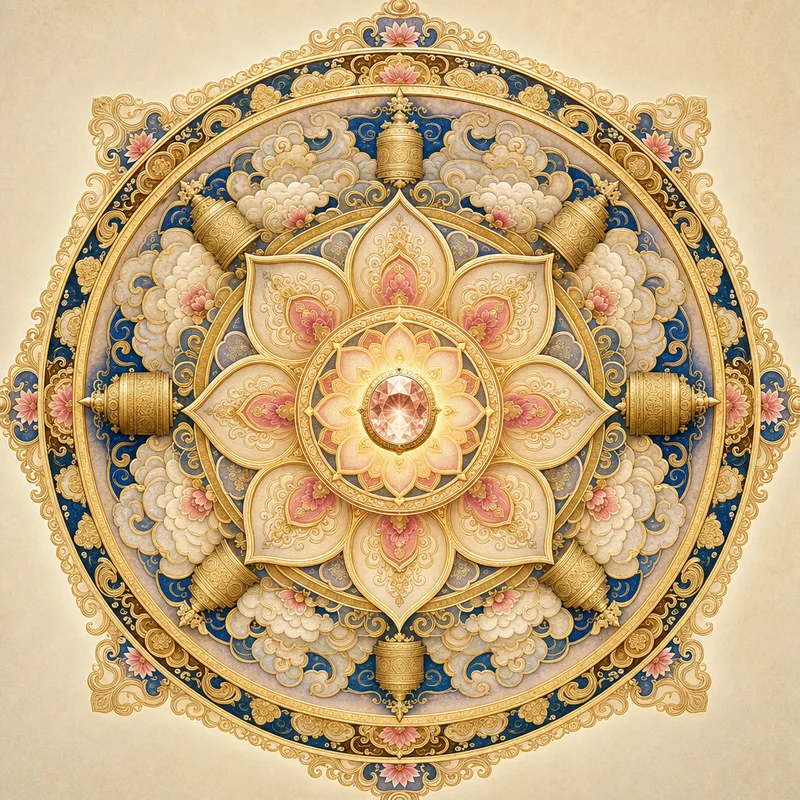
Read together, the syllables say: the jewel of compassion is found in the lotus of wisdom — and both are already within you. The mud a lotus grows from is not an obstacle to the flower; it is the ground of it. In the same way, the difficulties of an ordinary life are the very material that compassion grows from.
The Dalai Lama teaches that the six syllables purify the six root afflictions — pride, jealousy, desire, ignorance, greed and anger — which is why the mantra is chanted not once but in long, flowing repetition: each cycle another gentle pass over the mind.
Benefits of chanting
- Settles a racing mind quickly — the long vowel sounds naturally slow the breath
- Cultivates warmth and self-compassion during difficult stretches
- A steady anchor for meditation when silent sitting feels impossible
- Chanting aloud creates gentle vibration in the chest and head that many find deeply calming
- Pairs beautifully with mala beads for a 108-repetition practice
How to chant it
- Sit comfortably and let your breath settle for a few moments.
- Play the recording above and simply listen once through — let the melody find you.
- Join in softly: OM — MA-NI — PAD-ME — HUM, letting each syllable ride an easy exhale.
- Traditional practice is 108 repetitions (one mala round), but even 3–5 minutes settles the nervous system.
- Finish in silence for a minute; notice the quiet the mantra leaves behind.
Frequently asked questions
What does Om Mani Padme Hum mean literally?
Literally, “Om — jewel — in the lotus — hum.” The jewel is compassion, the lotus is wisdom; the mantra expresses their union, and honors Avalokiteshvara, the bodhisattva of compassion.
How many times should I chant Om Mani Padme Hum?
Traditionally 108 times, counted on a mala. But there is no minimum — Tibetans chant it continuously through the day. Even a few unhurried minutes has a noticeable settling effect.
Can I listen instead of chanting?
Yes. Listening attentively is itself a traditional practice — prayer wheels exist precisely so the mantra can work without speech. Chanting along adds the physical resonance of your own voice, which many people find deepens the effect.
Do I need to be Buddhist to use this mantra?
No. The mantra is freely given in the Tibetan tradition — anyone may recite it. Approaching it with basic respect for its origin is all that is asked.
Chant with our healing music
Mantra and frequency belong together — a soft 432 Hz or 528 Hz bed underneath gives your chanting something to rest on, and carries the stillness on long after the last repetition. Our meditation music is free on every platform.
Many practitioners chant over a soft carrier tone. Try our free tone generator at 136.1 Hz (the “OM frequency”), or explore all sound tools.