

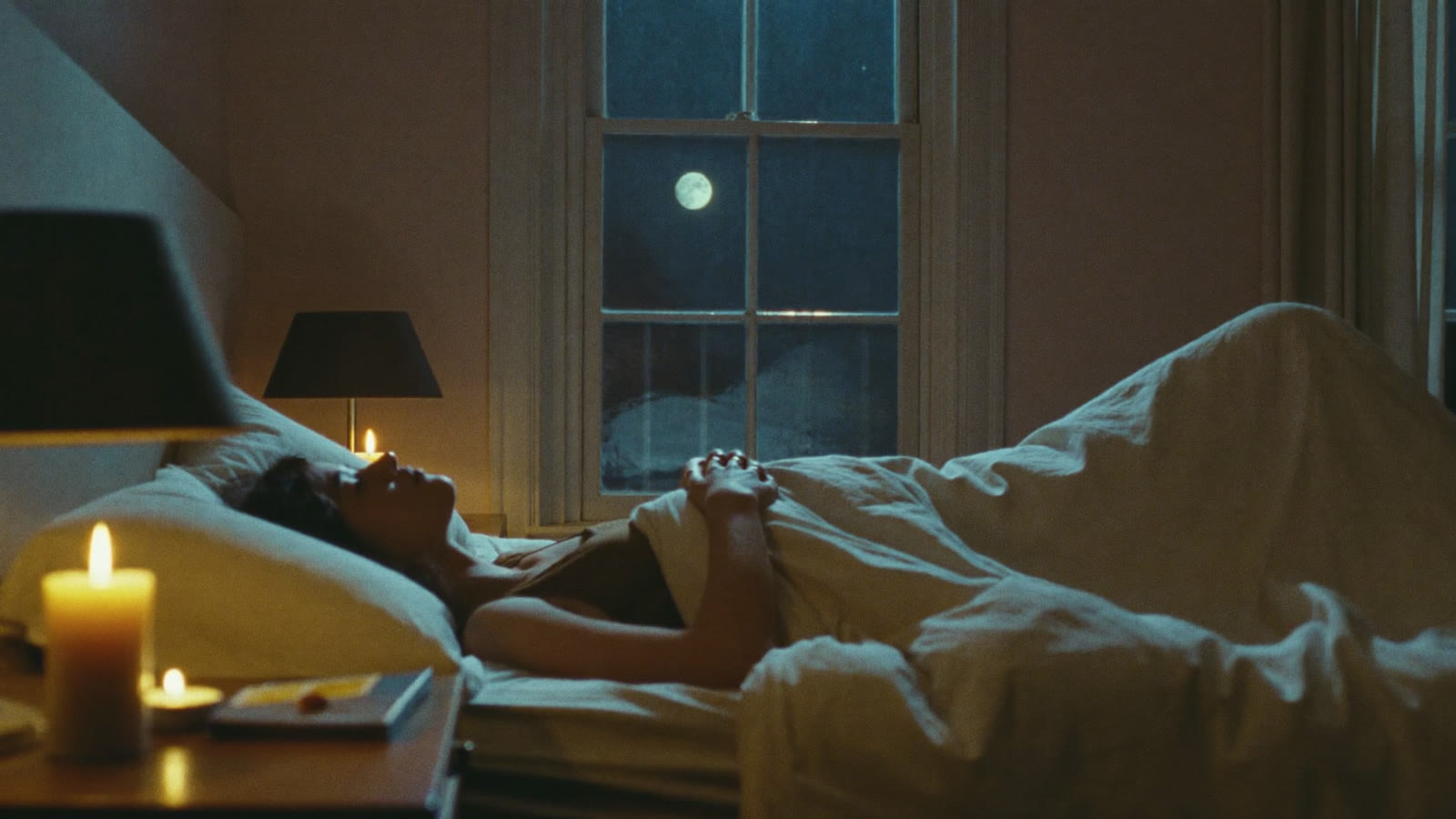
- ADHD brains are alert at night for real reasons: delayed melatonin release (later chronotype), a dopamine system that finally gets quiet-time stimulation, and no daytime demands competing for attention
- The core trick is not forcing quiet — it's giving the racing mind ONE low-effort channel to follow: steady sound, an unwinding ritual, a brain-dump page
- Externalize everything: a two-minute brain dump closes the mental tabs the ADHD brain keeps re-opening
- Steady audio (rain, brown noise, slow 432 Hz music) out-competes intrusive thoughts without demanding effort
- Work with the ADHD chronotype: consistent wake time + morning light shifts the clock more reliably than earlier bedtimes
Why the ADHD Mind Switches ON at Night
It's not imagination and it's not poor discipline. Three things stack up at bedtime for ADHD brains. First, biology: melatonin — the darkness hormone that starts the descent into sleep — is released on average about an hour and a half later in adults with ADHD, which is why so many are natural night owls. Second, dopamine: the day's obligations are gone, nobody is asking anything, and the understimulated ADHD brain finally has free rein — so it reaches for the most stimulating thing available, whether that's a phone, a project, or a spiraling train of thought. Third, revenge bedtime procrastination: when the day felt like it belonged to everyone else, staying up feels like taking your time back — and ADHD's weaker brakes make that pull much stronger.
Understanding this changes the strategy completely. You are not trying to force a busy mind to be silent (that fails for everyone, and spectacularly for ADHD). You are giving the mind one gentle channel to follow instead of forty.
The Wind-Down That Works With ADHD, Not Against It
1. The brain dump (two minutes, non-negotiable)
Keep paper by the bed. Before lights out, write every open loop — tomorrow's tasks, the embarrassing thing from 2019, the idea you'll definitely forget. ADHD working memory keeps re-surfacing loops precisely because it doesn't trust itself to hold them; the page becomes the trusted holder, and the re-surfacing quiets measurably.
2. One channel of steady sound
An ADHD mind in a silent room generates its own stimulation — that's the racing. A steady, low-effort audio stream gives the attention system something to rest on that asks nothing back: rain, green or brown noise, or slow music tuned to 432 Hz. Keep it just above audible and let it run past sleep onset. The playlist below is composed for exactly this job — and our complete ADHD music guide covers what to use in the daytime, too.
3. Dim the dopamine tap
The phone is the night's biggest ADHD trap: infinite, effortless stimulation exactly when your brakes are weakest. Don't rely on willpower — change the environment. Charge it across the room (or outside the bedroom), and put the steady sound on a speaker or a sleep-timer so the phone has no bedtime job at all.
4. Warmth, weight, and darkness
A warm shower an hour before bed (the after-cooling is a sleep trigger), a weighted blanket (deep pressure settles a restless nervous system), and genuinely dark room. Boring advice that works better for ADHD than for anyone, because the ADHD system is more reactive to every source of stimulation you remove.
Fix the Clock, Not Just the Night
Because ADHD melatonin runs late, forcing a 10 p.m. bedtime onto a 1 a.m. body clock just manufactures two frustrated hours in the dark. Shift the clock instead: same wake time every day (weekends within an hour), 10–20 minutes of outdoor light soon after waking, and move bedtime earlier in 30-minute steps once you're actually falling asleep fast. Full protocol in how to fix your sleep schedule.

When the Thoughts Still Race
Some nights the mind wins anyway. Two rescue moves: the cognitive shuffle — picture random unconnected objects (ladder, mango, canoe...) which occupies the verbal mind with unlinkable content until it gives up — and getting up briefly after ~20 wide-awake minutes for a boring lap of the house in dim light, then returning. Both beat lying there negotiating with your own brain. If the racing is anxious rather than busy, our how to stop spiraling guide is the better toolkit.
This article supports wellbeing — it is not medical advice, and it is not a substitute for diagnosis or treatment. If ADHD symptoms are significantly affecting your life, a clinician who knows ADHD is the right next step.
Frequently Asked Questions
Why does my ADHD get worse at night?
Later melatonin release, an understimulated dopamine system finally free to seek stimulation, and the disappearance of external structure. The mind isn't malfunctioning — it's doing what ADHD brains do when nothing external is steering. That's why external channels (sound, rituals, a brain-dump page) work better than internal willpower.
What sounds help an ADHD brain sleep?
Steady, unchanging textures: rain, brown noise, green noise, or slow instrumental music around 432 Hz. The key qualities are predictability (no lyrics, no surprises) and continuity — an even soundscape the attention system can rest on. Play it low, and let it run.
How long does it take to retrain an ADHD sleep pattern?
With a fixed wake time, morning light and a consistent wind-down channel, most people feel traction within two weeks. The chronotype shift is the slow part — about 30 minutes of movement per few days — so aim for consistency over speed.
Listen while you read
Music for Creativity — Lyric-free sound for making things. Streams free in your browser, no app, no sign-up.
For the full sound-side protocol — what to play, how loud, and why ADHD brains need different sleep music at all — see our companion guide to ADHD sleep music.