
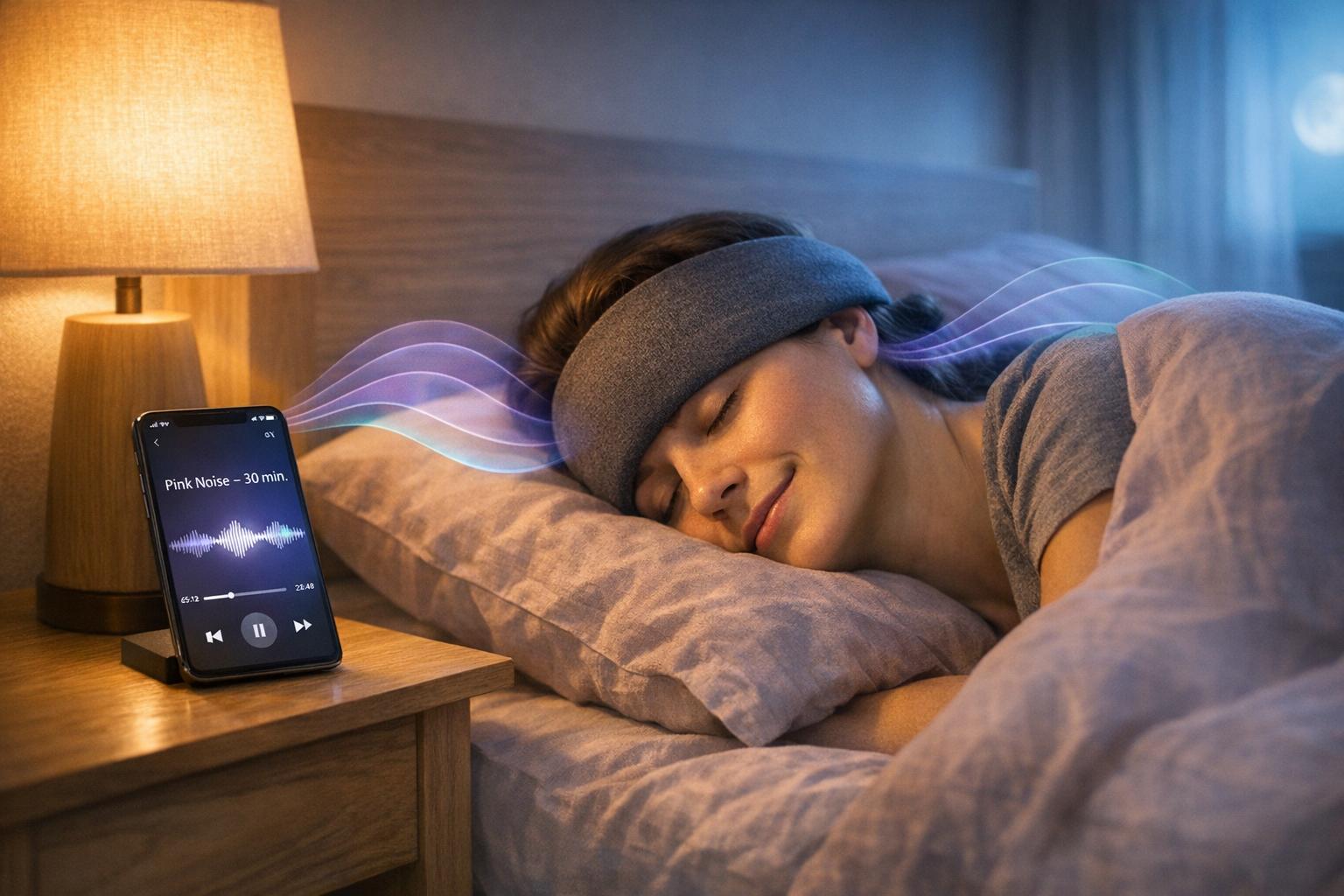
- A 2025 meta-analysis of eight studies found acoustic stimulation reduced insomnia severity, with an average 2.68-point drop on the Pittsburgh Sleep Quality Index.
- Participants exposed to delta-range binaural beats fell asleep 37% faster and reported a 42% improvement in sleep quality versus placebo sounds.
- Pink noise has been shown to enhance deep sleep by 23% and reduce nighttime awakenings by 35%.
- A 2024 Stanford Medicine pilot study saw average Insomnia Severity Index scores fall from 19.8 to 8.5 after four weeks of nightly acoustic resonance therapy.
- For best results, start listening 30-60 minutes before bed at 40-60% volume and stick with the routine for at least 21 days.
- Stereo headphones are essential for binaural beats, while pink noise and isochronic tones work well from speakers placed 3-6 feet from the bed.
Struggling with insomnia? Sound therapy might be the natural solution you need. Research shows it can improve sleep quality by syncing your brain’s rhythms with specific sound frequencies like delta waves and binaural beats. Unlike medication, sound therapy avoids side effects and dependency, promoting relaxation and deeper sleep through soothing tones.
The Science Behind Sound Therapy for Sleep
Brainwave Entrainment Explained
Brainwave entrainment, or neural synchronization, happens when your brain's electrical activity syncs with the rhythm of external sounds. This process helps shift your brain from an alert state to one primed for deep, rejuvenating sleep.
Binaural beats play a key role here. They create a perceived "phantom frequency" in your brain, which equals the difference between two input frequencies. This phenomenon can guide your brain into specific states, such as relaxation or deep sleep.
But sound therapy isn't just about brainwaves. It also impacts your body by activating the parasympathetic nervous system, often referred to as the "rest and digest" mode. This activation reduces cortisol levels (the stress hormone) while increasing melatonin, serotonin, and oxytocin - chemicals that promote relaxation and emotional well-being. Additionally, soft, steady tones help anchor your mind, which can calm racing thoughts. As Dr. Suzanne Gorovoy, a Clinical Sleep Psychologist, emphasizes:
"Music for sleep works best when it's predictable and calming. You don't want sudden loud changes or complex beats that keep your brain alert".
These combined effects explain how sound therapy can lead to measurable improvements in sleep quality.
Research on Sound Therapy Effectiveness
Scientific studies back up these mechanisms with hard data. Research shows that sound therapy can significantly improve sleep metrics, particularly for those struggling with insomnia. For example, a 2025 meta-analysis of eight studies found that acoustic stimulation reduced insomnia severity, with participants reporting an average drop of 2.68 points on the Pittsburgh Sleep Quality Index and 2.26 points on the Insomnia Severity Index. Specific sound frequencies also showed notable effects: delta wave frequencies increased deep sleep by up to 31%, while pink noise enhanced deep sleep by 23% and reduced nighttime awakenings by 35%.
Other findings highlight the effectiveness of binaural beats. Participants exposed to delta-range binaural beats fell asleep 37% faster and reported a 42% improvement in sleep quality compared to those listening to placebo sounds. Another method, alpha phase-locked auditory stimulation - where sound pulses are timed to match specific brainwave phases - helped adults with chronic insomnia fall asleep about 10 minutes faster, a 29.3% improvement.
Further supporting evidence comes from a 2019 study conducted by researchers at AIIMS Patna. Led by Dr. Kamlesh Jha and Pramita Dubey, the study involved 15 male volunteers with delayed sleep latency. When participants listened to 432 Hz music for sleep during daytime naps, there was a statistically significant increase in alpha wave energy at sleep onset (P < 0.01), compared to sessions without music. Similarly, a 2020 study by Gao et al. followed 33 young adults who tried different types of brainwave music for 20 minutes before bed over six days. Those who listened to slow-wave sleep music experienced better sleep efficiency than participants exposed to REM-based music or white noise.
These findings illustrate how sound therapy can be a powerful tool for improving sleep, offering both physiological and psychological benefits.
Sound Therapy Methods and Tools
Binaural Beats for Relaxation
Sound therapy taps into the brain's natural ability to synchronize with rhythmic stimuli to improve sleep quality. One popular method is binaural beats, which involve playing two slightly different frequencies in each ear. This creates a perceived "phantom tone" that helps shift brainwaves from active beta states to more relaxed alpha and theta states. Research shows that people using binaural beats fell asleep 37% faster and reported a 42% boost in sleep quality compared to those listening to placebo sounds. To get the full effect, stereo headphones are essential for delivering the distinct frequencies.
Delta Waves and Pink Noise
Delta waves, with frequencies between 0.5 and 4 Hz, are crucial during deep, non-REM sleep. Stimulating these waves can increase deep sleep by as much as 31%. On the other hand, pink noise, which mimics natural sounds like rainfall, helps mask disruptive environmental noises. Studies reveal that pink noise can enhance deep sleep by 23% and reduce night awakenings by 35%.
Healing Miracle Frequencies Soundscapes
Healing Miracle Frequencies offers curated soundscapes designed to support natural sleep cycles. These tracks combine 432 Hz and 528 Hz frequencies with delta waves, binaural beats, isochronic tones, and calming nature sounds. You can access this music for free on platforms like Spotify, Apple Music, Amazon, Tidal, and even extended versions on YouTube.
Research backs the benefits of these frequencies. Listening to 432 Hz music has been shown to lower anxiety by 26% compared to standard tuning, while 528 Hz exposure may reduce stress markers in saliva by up to 100%. To maximize results, start your sound therapy session 30–60 minutes before bedtime, set the volume to 40–60%, and stick to the routine for at least 21 days.
How to Add Sound Therapy to Your Sleep Routine
Creating a Bedtime Sound Therapy Routine
Start your sound therapy session about 30–60 minutes before bedtime. This gives your brain enough time to transition from active beta waves into the relaxed alpha and theta states, which are ideal for winding down. Keep the volume at 40–60% of your device's capacity, which translates to approximately 45–55 dB.
For binaural beats, stereo headphones are a must. If you're using pink noise or isochronic tones, place speakers about 3–6 feet from your bed. Set a timer so the sounds stop playing after 60–90 minutes.
Pair sound therapy with other sleep-friendly habits for the best results. Keep your bedroom temperature between 65–68°F, use blackout curtains or a sleep mask, and avoid blue light exposure for at least two hours before bed. Stick to this routine for at least 21 days. While you may notice some improvements within the first 1–2 weeks, the full benefits often become clear after 3–4 weeks.
This combination of sound therapy and good sleep hygiene creates a strong foundation for better rest. Over time, you can refine your approach by observing how your body responds.
Monitoring Results and Making Adjustments
Once your routine is in place, track your sleep patterns to see what's working and where you might need adjustments. Use a sleep journal to record details like how quickly you fall asleep, how often you wake up during the night, and how refreshed you feel in the morning. This can help you figure out which sounds and frequencies are most effective for your body.
Try the 7-Night Protocol to identify your ideal setup. Spend the first two nights without any sound to establish a baseline. On nights three and four, use pink noise. For nights five and six, switch to binaural beats with headphones. On the seventh night, combine your favorite elements from the week.
"The best sleep sound is the one that works for YOUR brain. What helps one person might harm another's sleep. That's why tracking and personalization are essential." - Dr. Matthew Walker, Author of "Why We Sleep"
If you don’t see results with 432 Hz after two weeks, experiment with other frequencies like 528 Hz or 512 Hz. You can also tweak how you listen. If headphones feel uncomfortable, try flat pillow speakers that slide under your pillow or invest in high-quality bedside speakers. The key is consistency - stick with each method long enough to give it a fair shot before switching things up.
Benefits and Safety of Sound Therapy
Incorporating sound therapy into your routine can offer a range of benefits, making it a safe and natural way to improve sleep. Over time, your brain begins to associate specific sounds with sleep, thanks to a process called classical conditioning. Regular sessions also activate the parasympathetic nervous system - often referred to as the "rest and digest" system - which helps lower heart rate, blood pressure, and stress hormones like cortisol.
Many users report feeling less anxious and experiencing reduced symptoms of depression. They also notice calmer minds at bedtime and improvements in memory, attention, motor skills, and even immune function. Early research hints at another potential benefit: sound therapy might aid glymphatic clearance during deep sleep, which could help reduce the risk of neurodegenerative conditions like Alzheimer's.
A pilot study conducted in September 2024 by Dr. Kevin Lin and Dr. Robson Capasso at Stanford Medicine explored the effects of personalized acoustic resonance therapy on 20 adults with moderate-to-severe insomnia. Participants used the therapy for 45 minutes each night over four weeks. The results were promising: their average Insomnia Severity Index score dropped from 19.8 to 8.5 - an impressive reduction of 11.3 points. Even more encouraging, 45% of participants achieved a score below 7, which suggests their insomnia was resolved. Importantly, no adverse effects were reported during the study.
"This is an exciting step forward in non-pharmacological insomnia treatment." - Dr. Kevin Lin, M.D., Lead Researcher, Stanford Medicine
Unlike many other sleep aids, sound therapy avoids risks like dependency, daytime grogginess, and long-term side effects. It’s a non-invasive, drug-free option that aligns with your body’s natural rhythms. To maximize its benefits, aim for daily sessions lasting 30–45 minutes. However, if you have conditions like cardiac arrhythmia, epilepsy, or use implanted medical devices, it’s important to consult your doctor before starting.
Conclusion
Sound therapy offers a natural and safe way to improve sleep without relying on medication. By tapping into your brain's natural rhythms with frequencies like delta waves and tones such as 432 Hz and 528 Hz, it becomes easier to fall asleep, achieve better sleep quality, and wake up feeling more refreshed. In fact, studies show that participants using binaural beats fell asleep 37% faster and experienced a 42% improvement in sleep quality compared to placebo groups.
What makes sound therapy appealing is its simplicity. There’s no need for pricey gadgets or complicated routines. Just 30–60 minutes of listening before bed can help your body switch from a stressed state to a relaxed one, naturally lowering cortisol levels and boosting melatonin production. This process, known as entrainment, helps guide your brain into a restful state, making it easier to integrate sound therapy into your nightly routine.
Platforms like Healing Miracle Frequencies provide therapeutic music designed for sleep and relaxation. Their soundscapes, available on Spotify, Apple Music, and YouTube, combine carefully selected frequencies to support your brain through natural sleep cycles.
Consistency is key. Allow your brain at least 21 days to adapt to the entrainment process. Experiment with different frequencies - delta waves for deep sleep, theta waves to calm your mind, or 432 Hz to ease pre-sleep anxiety. Keep the volume at a comfortable level, around 40–60% of your device’s maximum, and let the sounds work their magic.
Frequently Asked Questions
What type of sound is best for insomnia?
Finding the best sound to combat insomnia often comes down to personal preference, but some frequencies and patterns are known to work wonders. For instance, frequencies like 432 Hz and 528 Hz are often associated with relaxation and stress relief. Meanwhile, pink noise, such as the soft patter of rain, can help deepen sleep by masking disruptive background noise.
Another effective option is binaural beats, which are designed to synchronize your brainwaves. These beats encourage your brain to shift into slower rhythms, the kind linked to relaxation and restorative sleep. Together, these sounds help create a soothing atmosphere that supports a peaceful night’s rest.
Can sound therapy replace sleeping pills?
Sound therapy can help improve sleep by encouraging relaxation and aiding in reaching deeper stages of rest. However, it’s not usually a direct substitute for sleeping pills. As a natural and non-invasive option, it works well for those dealing with mild to moderate sleep problems. For severe insomnia or underlying health issues, medical treatment might still be necessary. Many people use sound therapy alongside medication to potentially lower their dependency on pharmaceutical solutions.
What should I do if binaural beats give me headaches?
If binaural beats give you headaches, stop listening right away. Sometimes, discomfort like this can happen, and it's better to take a break. You could try experimenting with different frequencies or soundscapes later, but only after the headache has completely gone away. If the problem continues, it’s a good idea to check with a healthcare professional to rule out any other potential causes.
How long before bed should I start listening to sound therapy?
Begin your sound therapy session about 30 to 60 minutes before bedtime. This window gives your brain enough time to transition from active beta waves into the relaxed alpha and theta states associated with falling asleep. Keep the volume at roughly 40 to 60 percent of your device's maximum and consider setting a timer so the sound fades out after 60 to 90 minutes once you have drifted off.
How long does it take for sound therapy to improve sleep?
Most people notice some improvement within the first one to two weeks of consistent nightly use, but the full benefits typically become clear after three to four weeks. Sound therapy works through entrainment, a gradual process in which your brain learns to associate specific sounds with sleep, so consistency matters more than any single session. Sticking with a nightly routine for at least 21 days gives the entrainment process time to take hold.