

- Binaural beats work by playing two slightly different tones in each ear (for example 200 Hz and 206 Hz) so the brain perceives a 6 Hz beat that nudges brainwaves toward relaxed theta states.
- Sound therapy shifts the body from sympathetic "fight or flight" mode into parasympathetic "rest and digest" mode, lowering heart rate and easing muscle tension.
- For sleep, healing frequencies of 432 Hz and 528 Hz, theta-range binaural beats (4 to 8 Hz), and white or pink noise each address different sleep problems.
- Begin listening 30 to 60 minutes before bed at around 50 to 60 decibels, the volume of normal conversation, and use a 60 to 90 minute timer when starting out.
- Keeping a sleep journal or using tools like the Pittsburgh Sleep Quality Index helps you track which frequency, duration, and volume settings work best.
Sound therapy can help improve your sleep by using calming sounds and specific frequencies to relax your mind and body. Whether you're dealing with stress, racing thoughts, or external noise, sound therapy offers simple and effective solutions. Here's a quick breakdown:
- Healing Frequencies (432 Hz, 528 Hz): Promote relaxation and stress relief.
- Binaural Beats: Synchronize brainwaves for deeper relaxation and sleep.
- White/Pink Noise: Mask disruptive sounds like traffic or snoring.
- Nature Sounds: Create a soothing, natural sleep environment.
To get started, use headphones or a sound machine, experiment with different sound types, and integrate them into a nightly routine. Start listening 30–60 minutes before bed at a comfortable volume, and track your sleep quality to find what works best for you.
Sound therapy is an easy, natural way to support better rest. Try it tonight and see how it transforms your sleep!
How Sound Therapy Affects Your Mind and Body
Listening to specific sounds or frequencies before bed does more than just set a calming atmosphere - it actively influences your brain and nervous system. This helps your body transition more smoothly into sleep.
Your brain generates electrical waves that correspond to your level of alertness. Sound therapy works by guiding these brainwave patterns into states that encourage relaxation and recovery. Let’s dive into how these shifts happen and why they matter.
Sound and Brainwave Patterns
When you're awake and alert, your brain is dominated by beta waves. As you start to unwind, alpha waves take over, followed by theta waves (4–8 Hz) during light sleep, and finally, delta waves during deep sleep. Binaural beats play a role in this process by introducing tones that naturally encourage relaxation and reduce anxiety.
Here’s how it works: wearing headphones, you hear two slightly different frequencies in each ear (e.g., 200 Hz in one ear and 206 Hz in the other). Your brain processes the difference, creating a 6 Hz beat, which nudges your brainwaves from active beta waves into more relaxed theta waves. Research shows that binaural beats in the theta range can lower high-frequency beta activity while increasing theta waves. This helps reduce anxiety, shortens the time it takes to fall asleep, and enhances slow-wave sleep for those with mild sleep difficulties. For the best results, headphones are essential since each ear needs to receive a distinct frequency for your brain to generate the perceived beat.
Stress Reduction Through Sound
Sound therapy doesn’t just calm the mind - it also helps the body unwind. Your nervous system has two primary modes: the sympathetic system, which activates the "fight or flight" response, and the parasympathetic system, which supports "rest and digest" functions.
When your sympathetic system is active, your heart rate increases, and your muscles stay tense - conditions that make falling asleep harder. Sound therapy encourages your body to switch to parasympathetic mode. This shift lowers your heart rate, eases muscle tension, and signals your body that it's time to relax.
For those who find it difficult to wind down at night, sound therapy provides rhythmic cues that can interrupt anxious thought patterns. Instead of forcing sleep, you’re creating an environment where rest feels natural. As your brainwaves slow and your body relaxes, sleep becomes a natural next step rather than something you need to chase.
Many people have found that integrating binaural beats into their evening routines helps them move from the stress of daily life into a state where sleep becomes more attainable. Whether it’s through sound bath recordings or curated sleep playlists, these auditory tools offer a gentle, effective way to bridge the gap between wakefulness and rest.
Selecting Sounds and Tools for Sleep
Understanding how sound influences sleep is just the beginning. The next step is finding the right sounds and tools that work for you. It might take a bit of trial and error, but once you discover what helps you unwind, it can make a big difference. Below are some sound types and tools to consider as you create your sleep-friendly environment.
Types of Sounds That Support Sleep
Different sounds can help guide your brain into the relaxed state needed for sleep. Here's a breakdown of some popular options:
Healing frequency music at 432 Hz or 528 Hz is often used to encourage calmness. For example, music tuned to 432 Hz is said to have a grounding effect, making it a great choice for winding down 30 to 60 minutes before bed. It helps quiet the mind without being too attention-grabbing. On the other hand, 528 Hz is linked to stress relief and emotional balance, which can be especially helpful if you're feeling tense after a long day. Both frequencies work well as background music while you read, stretch, or prepare for bedtime.
Binaural beats are another option, particularly if you use headphones. For sleep, beats in the theta range (4–8 Hz) are recommended because they align with the brainwave patterns of light sleep. If your mind tends to race at night, binaural beats can provide a focal point to interrupt those spiraling thoughts. Start with 20–30 minute sessions to see how they work for you.
White noise creates a steady background sound, like the hum of a fan, which can mask sudden noises such as traffic or a snoring partner. It's a helpful tool for people who are easily disturbed by external sounds.
Pink noise is similar to white noise but softer and more balanced. Think of it as the sound of gentle rain or rustling leaves. If white noise feels too harsh, pink noise might be a more soothing alternative while still providing consistent coverage.
Nature sounds - like ocean waves, rainfall, or forest ambience - can be incredibly calming. These sounds often have natural variations in rhythm and tone, which some people find more engaging and less monotonous than static noises.
Each sound type has its strengths, so it’s worth matching the sound to your specific needs. If outside noise is your main issue, white or pink noise can help mask disruptions. If stress or an overactive mind keeps you awake, healing frequencies or binaural beats may be more effective. And if you’re just looking for a tranquil backdrop, nature sounds or 432 Hz music can set the mood.
Tools and Platforms for Listening
Once you've chosen your preferred sounds, you'll need the right tools to make them part of your nightly routine.
Streaming platforms like Spotify and Apple Music offer a wide range of sleep-focused content. For instance, Healing Miracle Frequencies provides tracks specifically designed for relaxation and sleep. Their soundscapes often combine calming melodies with therapeutic frequencies, catering to various preferences. If you want uninterrupted sound throughout the night, their YouTube channel features extended tracks lasting up to 10 hours.
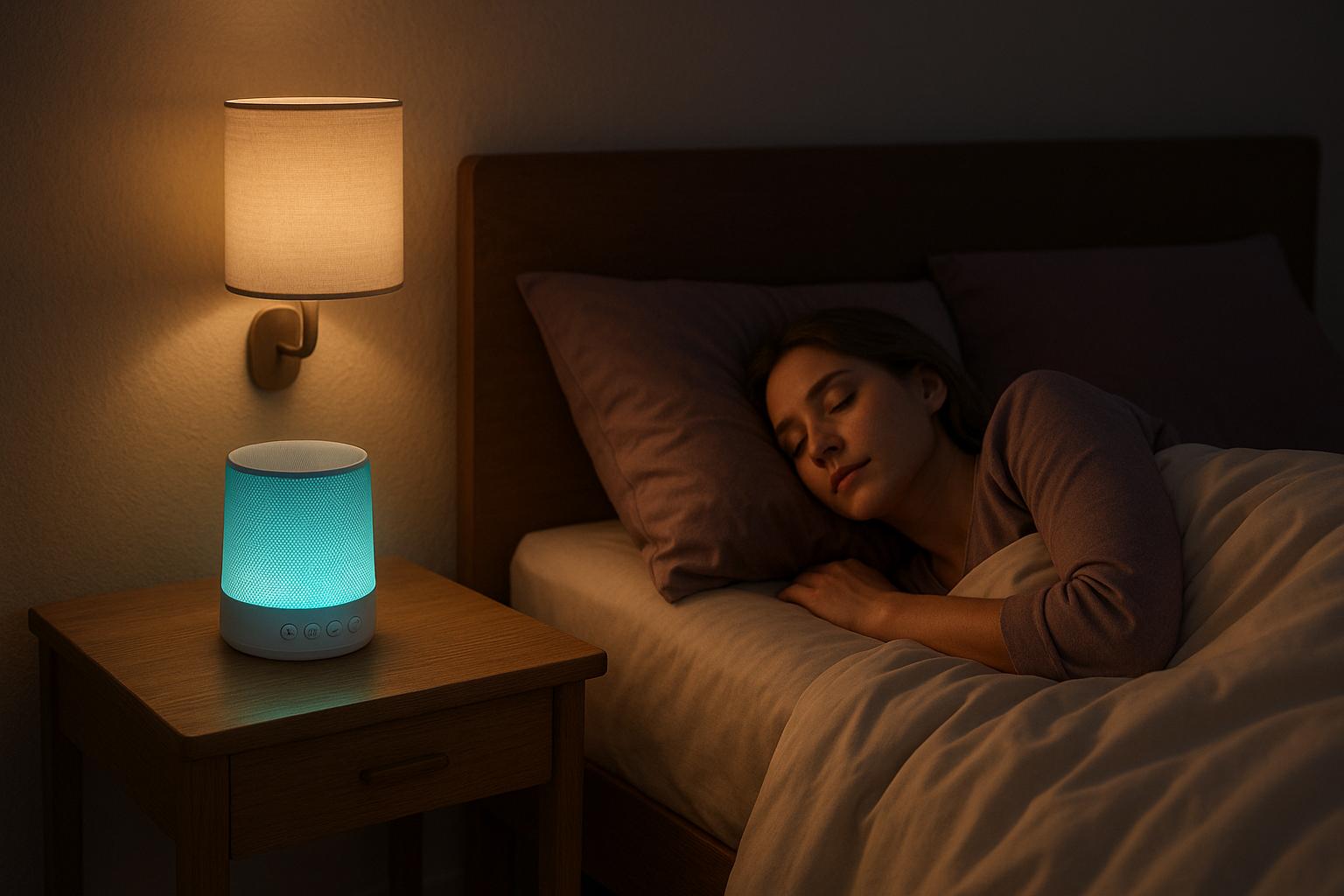
Sound machines are a great option if you want a dedicated device that doesn’t rely on your phone or the internet. These machines typically offer white noise, pink noise, or nature sounds. Basic models are affordable, starting around $20, while more advanced ones with extra features like timers and multiple sound options can cost up to $100.
Smartphone apps provide flexibility and portability, making them a convenient choice. To avoid interruptions, consider enabling airplane mode or "Do Not Disturb." Many apps also include timers that gradually fade the sound as you fall asleep.
Headphones are essential for binaural beats but optional for other sound types. If you share a bed with someone who prefers silence, sleep headphones or side-sleeping earbuds can be a game-changer. Look for designs that are comfortable and low-profile to avoid discomfort during the night.
When to Listen and Volume Settings
Timing and volume play a big role in how effective sound therapy can be for sleep. Starting your session 30 to 60 minutes before bedtime allows your nervous system to gradually shift into relaxation mode. During this time, dim the lights, put away screens, and pair the sounds with calming activities like reading or light stretching.
Volume settings should be comfortable - loud enough to hear clearly but not so loud that they demand your attention or feel overwhelming. Aim for a level around 50–60 decibels, roughly the volume of a normal conversation. For binaural beats, keep the volume low to preserve the subtle frequency differences and avoid potential discomfort.
Some people prefer to let the sound play all night, while others find it works best as they fall asleep. If you're new to sound therapy, start with a timer for 60 to 90 minutes. This gives you enough time to drift off while ensuring the sound doesn’t interfere with deeper sleep stages. Experiment with different durations to find what works best for you.
Finally, pay attention to how you feel in the morning. If you wake up refreshed, your settings are likely doing their job. If you feel groggy or notice lighter sleep, the sound might be too stimulating. Small adjustments in volume or duration can make a big difference in how well sound therapy supports your rest.
Building a Nightly Sound Therapy Routine
Once you've explored different sounds and tools, the next step is to make sound therapy a regular part of your nightly routine. Why? Because your body thrives on patterns. When you repeat calming activities every evening, your brain starts associating them with sleep, making it easier to unwind. Sound therapy works best when it’s part of a broader wind-down process rather than a standalone solution. Here's how you can incorporate it seamlessly into your evenings.
Creating a Pre-Sleep Routine
A good pre-sleep routine begins about 60 to 90 minutes before bedtime. This transition period gives your nervous system the chance to shift gears from the busyness of the day to a more relaxed state, preparing your body for rest.
- Dim the lights: Lowering the lights signals your body that it’s time to wind down. Soft lighting encourages melatonin production, which helps regulate sleep.
- Limit screen time: Blue light from screens can disrupt your sleep cycle. Aim to avoid screens for at least 30 minutes before bed.
- Engage in relaxing activities: Light stretching, gentle yoga, or simple breathing exercises can ease physical tension. Pair these with soothing sound therapy, like 432 Hz music or binaural beats, to calm your mind. Reading a light book or journaling can also work wonders when accompanied by relaxing sounds.
- Add aromatherapy: Scents like lavender, chamomile, or sandalwood can enhance relaxation. Use a diffuser with essential oils or a pillow spray to complement the calming sounds.
- Optimize your sleep environment: Comfortable bedding is essential. Even the most soothing sounds won’t help if your bed isn’t inviting. Also, sticking to a consistent bedtime helps regulate your internal clock.
These steps can be adjusted to meet your specific needs, whether you’re battling stress, restlessness, or other sleep challenges.
Addressing Specific Sleep Problems
Different sleep issues require tailored solutions. Here's how sound therapy can help:
- Trouble falling asleep: If your mind races at bedtime, try theta-range binaural beats (4–8 Hz) to promote relaxation. Play them softly in the background or use headphones. Pairing this with deep breathing exercises can amplify the calming effect.
- Frequent night waking: If sudden noises disturb your sleep, try colored noise - white, pink, or brown - which acts as a consistent sound barrier. Dr. Roneil G. Malkani, a neurologist and Sleep Medicine expert at Northwestern Medicine, explains:
"Those who can benefit the most from using noise during sleep are those who are sensitive to noises or who live in places where there is more noise, such as urban areas."
Use a sound machine to play continuous noise throughout the night. Dr. Malkani advises keeping the volume low - just enough to mask disruptions without waking you up.
- Stress or anxiety: If your mind feels overwhelmed, 528 Hz music can help ease stress and restore emotional balance as part of your wind-down routine.
- Chronic sleep issues or insomnia: Combine multiple strategies for the best results. Ensure your room is quiet and dark, incorporate sound therapy, and avoid screens before bed.
For those sharing a bed with someone who prefers silence, consider sleep-friendly headphones. These are designed for comfort, even if you sleep on your side, and allow you to enjoy sound therapy without disturbing your partner.
Give your new routine one to two weeks to take effect. Track how you feel each morning to adjust as needed, helping you sleep more soundly and wake up refreshed.
Using Healing Frequencies for Better Sleep
Healing frequencies are designed to support better sleep by syncing with your body’s natural rhythms. Unlike ordinary background noise, specific frequencies like 432 Hz, 528 Hz, and binaural beats are known for their calming effects. They help ease your mind and emotions, turning your nightly routine into a peaceful journey toward rest. Let’s break down how each of these frequencies can contribute to a more restful sleep.
432 Hz for Relaxation Before Bed
The 432 Hz frequency is often used to unwind after a long day. Playing 432 Hz music softly during calming activities can help release physical and mental tension.
For example, during meditation or breathing exercises, this frequency can serve as an anchor. You can try a simple breathing pattern: inhale for 4 counts, hold for 4, and exhale for 6. In just 10–15 minutes, this can quiet your thoughts and help you feel more grounded. Pairing the music with light stretching or gentle yoga - like neck rolls, shoulder stretches, or forward folds - can further signal your body to relax.
Keep the volume low to create a soothing atmosphere without overstimulating your senses. Many people find that 30–40 minutes of 432 Hz music before bed helps them ease into sleep more effortlessly.
528 Hz for Evening Stress Relief
The 528 Hz frequency is thought to lower cortisol levels and boost oxytocin, making it a great tool for stress relief. Some studies even suggest it may support DNA repair and promote inner balance.
This frequency works best during quiet, reflective activities in the hour before bed. For instance, you can journal with soft 528 Hz music playing in the background. Writing about your day, expressing gratitude, or letting go of lingering worries can help bring emotional closure to your evening. You could also pair this music with a light, calming book to further transition from wakefulness to relaxation. Guided meditations that focus on emotional healing can also feel more restorative when accompanied by 528 Hz tones.
Although scientific research is still growing, many people report feeling more relaxed and experiencing better sleep after incorporating 528 Hz into their nightly rituals.
Binaural Beats for Deep Relaxation
While frequencies like 432 Hz and 528 Hz create a calming environment, binaural beats take relaxation a step further. These beats are created when two slightly different frequencies are played in each ear, prompting your brain to perceive a third tone. For instance, if one ear hears 300 Hz and the other hears 310 Hz, your brain perceives a 10 Hz tone.
To achieve this effect, the two tones should be under 1,000 Hz with a difference of less than 35 Hz. Stereo headphones are essential for delivering these distinct frequencies. Delta binaural beats (below 4 Hz) are particularly effective for sleep, as they align with the brainwaves produced during the deepest stages of rest. Listening to these beats helps synchronize brain activity, reduce arousal, and promote dreamless, restorative sleep.
To get started, play delta or theta binaural beats for 20 to 30 minutes before bedtime. Lie down in a comfortable position, put on your headphones, and adjust the volume to a clear but gentle level (around 50–60% of your device’s maximum volume is a good starting point).
It’s important to use binaural beats responsibly. Avoid listening to them while driving or operating machinery, as they are designed to alter your state of awareness. If you share your sleeping space with someone who prefers silence, consider using sleep-friendly headphones to minimize disruption.
Consistency is key. Use binaural beats nightly for at least a week to help your brain associate these sounds with sleep and notice the benefits.
Measuring Your Sound Therapy Results
Tracking your progress is key to ensuring sound therapy aligns with your sleep goals. The good news? You don’t need fancy gadgets - simple methods can help you uncover patterns in your sleep.
Tracking Your Sleep Quality
Start by keeping a sleep journal. Each morning, jot down details like when you went to bed, when you woke up, how many times you woke during the night, and how rested you felt on a scale from 1 to 10. Also, note what type of sound you used (e.g., 432 Hz, 528 Hz, or binaural beats), how long you listened, and the volume level. These details will help you spot which settings work best for you.
If you’d like a more structured approach, try the Pittsburgh Sleep Quality Index (PSQI). This questionnaire evaluates sleep quality by considering factors like how long it takes you to fall asleep, total sleep time, disturbances, and how well you function during the day. You can find it online and use it periodically to track changes in your sleep patterns.
For a tech-savvy option, smartwatches or wearables can provide insights into sleep stages, heart rate variability, and nighttime movement. If you want even more precise data, actigraphy devices track movement patterns during sleep and are especially helpful when paired with a sleep journal.
Research shows that acoustic stimulation can improve how people perceive their sleep, whether they have sleep issues or not. Even if you don’t see immediate changes in data, feeling more rested and relaxed is a strong sign that sound therapy is working.
Adjusting Your Routine
After a week of tracking your sleep, use the data to tweak your routine - but make changes gradually. Adjusting too many variables at once makes it hard to pinpoint what’s actually helping.
Look for patterns in your journal or device data. For example, if you’re falling asleep quickly but waking up often, try lengthening your session while keeping other factors constant. Stick with the adjustment for about a week to see if it makes a difference.
Volume adjustments can also play a role. If you’re struggling to fall asleep, the volume might be too loud, keeping your brain alert. Lowering it slightly could help. On the flip side, if the sound is barely audible, increasing the volume may make the therapy more effective.
Timing is another area to explore. If you usually start listening after getting into bed, try beginning your session earlier, such as while reading or stretching before bed. This gives your brain extra time to respond to the frequencies before you lie down.
Be patient. Sleep habits don’t change overnight, especially if you’ve been dealing with sleep challenges for a while. Give each adjustment five to seven days before evaluating its impact. Some people even find that alternating between different frequencies throughout the week keeps their system more engaged than sticking to the same one every night.
Finally, keep an eye on external factors that might be affecting your sleep. Things like stress, caffeine, screen time, and room temperature can all influence your rest. By recording these alongside your sound therapy details, you can better isolate what’s working and what might need tweaking.
Conclusion
To wrap up, sound therapy offers a gentle and natural way to improve your sleep by tapping into specific frequencies that calm both mind and body. Frequencies like 432 Hz for relaxation, 528 Hz for easing stress, and binaural beats for promoting deep sleep have shown promise in reducing stress and encouraging restorative rest.
The beauty of sound therapy lies in its adaptability. You can begin with short sessions and gradually adjust based on what works best for you - keeping a sleep journal can be especially helpful. Whether your challenge is falling asleep, staying asleep, or simply waking up feeling more refreshed, there’s a sound-based method that can address your needs.
For a convenient starting point, platforms like Healing Miracle Frequencies offer carefully designed soundscapes that align with your body’s natural rhythms. These layered soundscapes make it easy to integrate healing frequencies into your nightly routine.
Why not give it a try tonight? Choose a frequency that matches your sleep goals, track your progress for a week, and fine-tune your approach as needed. While sound therapy isn’t a quick fix, it’s a practice that can build lasting benefits for your overall well-being.
Frequently Asked Questions
What type of sound therapy is best for improving my sleep?
Choosing the right sound therapy can make a big difference in addressing your sleep struggles. Here are some popular options worth exploring:
- Pink Noise: This is perfect for drowning out background sounds, creating a peaceful atmosphere that helps you stay asleep longer.
- Binaural Beats: If your mind tends to race at bedtime, these can help you unwind and ease into a more relaxed state.
- Specific Frequencies (like 432 Hz or 528 Hz): These are often associated with reducing stress and encouraging deep relaxation, which can enhance your sleep quality.
Try experimenting with these to see what suits you best. Whether you prefer sound machines, mobile apps, or pre-made playlists, it's easy to weave these into your nightly routine.
Can I combine sound therapy with other relaxation techniques to improve sleep?
Pairing sound therapy with other relaxation methods can amplify its benefits for sleep improvement. Techniques like deep breathing, meditation, or guided visualization work seamlessly with sound therapy, helping to ease both the mind and body into a restful state.
You might also try blending calming sounds - like pink noise, nature recordings, or gentle ambient music - to craft a serene atmosphere. These combinations can make your pre-bedtime routine more soothing and set the stage for a better night's sleep.
Can sound therapy have any negative effects when used for better sleep?
Sound therapy is considered safe and carries minimal risks, but its effects can vary from person to person. Some individuals might feel overstimulated, experience slight discomfort, or even have strong emotional reactions. This happens because certain sounds can tap into deep emotions, leading to unexpected releases. While these reactions are typically short-lived, they can be unsettling for some.
If you're trying sound therapy for the first time or have any specific health concerns, it's wise to check in with your doctor beforehand. This helps ensure it aligns with your unique needs and overall well-being.
How far in advance of bedtime should I start listening to sound therapy?
Most people get the best results by starting their session 30 to 60 minutes before bed. This gives your nervous system time to shift into a relaxed, parasympathetic state. Pair the sounds with calming activities like dimming the lights, reading, or light stretching to deepen the wind-down.
Do I need headphones to benefit from sound therapy for sleep?
Headphones are essential for binaural beats, since each ear must receive a distinct frequency for your brain to perceive the beat. For other sound types like white noise, pink noise, nature sounds, or 432 Hz music, a speaker or sound machine works just as well, and may be more comfortable for sleeping through the night.
Listen while you read
Sound Bath Music — Lie down and let the sound do the work. Streams free in your browser, no app, no sign-up.