Om Namo Bhagavate Vasudevaya
Om Namo Bhagavate Vasudevaya is the great twelve-syllable mantra — the dvadashakshari — that opens the Srimad Bhagavatam, one of the most beloved scriptures of the Vedic tradition.
Where other mantras sharpen focus or clear obstacles, this one practices something rarer: surrender. It is the mantra of loosening the grip — of trusting that the intelligence that moves through all things is also holding you.
Listen & chant along

Word by word
The deeper meaning
Vasudeva names the divine not as something far away but as “that which lives in everything” — including you. So the bow of this mantra lands close to home: it is a practice of releasing the exhausting project of controlling life, twelve syllables at a time.
In the Bhagavata tradition it is called a liberation (mukti) mantra, given without restriction to anyone who wishes to chant it. Its long, rolling phrase naturally slows the breath — one full mantra per exhale is a complete pranayama in itself.
Benefits of chanting
- The mantra of surrender — quiets the need to control outcomes
- Twelve rolling syllables create a naturally long, calming exhale
- Traditional refuge in times of overwhelm, grief or big transitions
- Softens the heart — the devotional counterpart to more austere practices
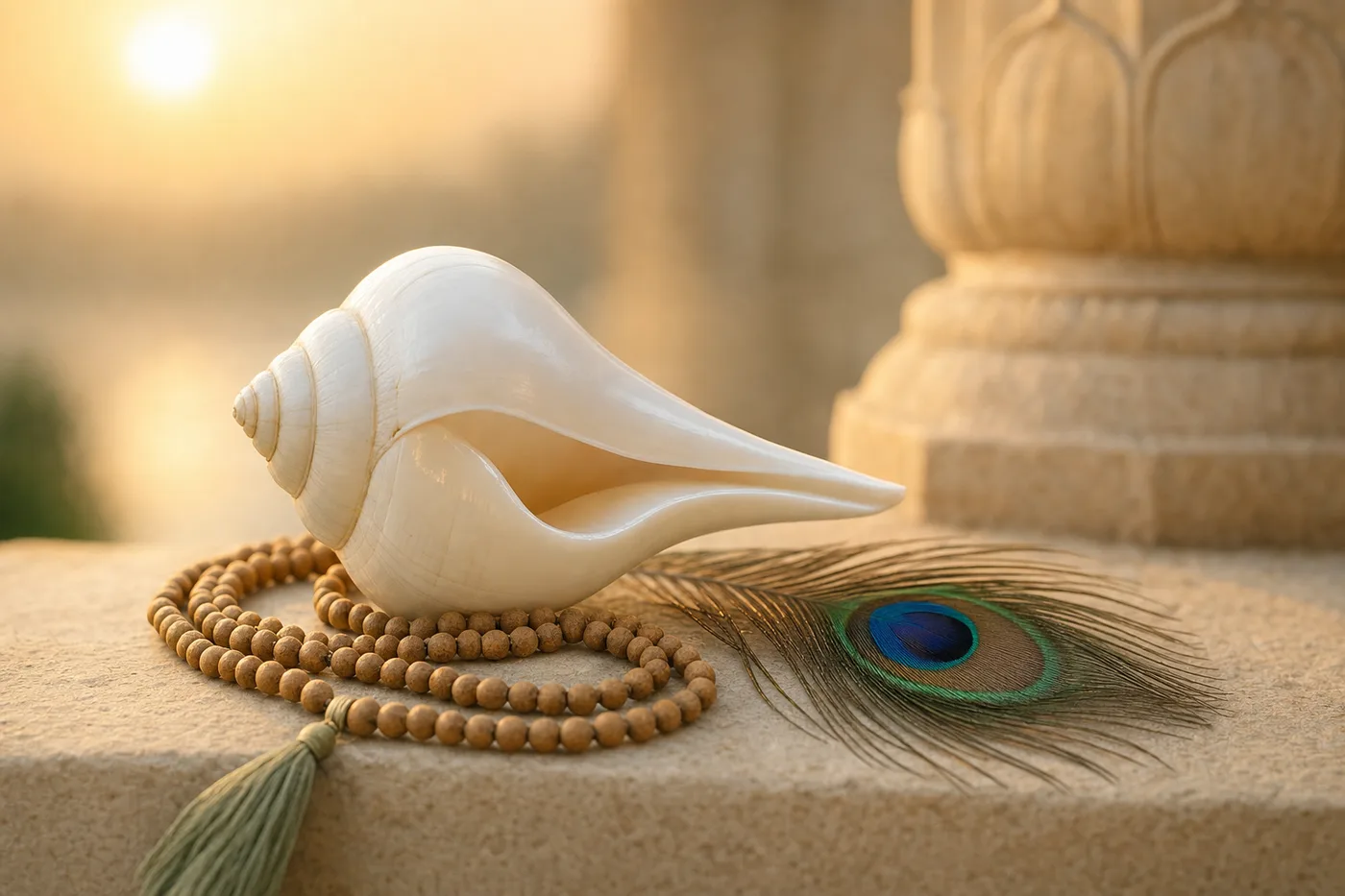
- Flows beautifully in japa: 108 repetitions on a mala settle into a rocking rhythm
How to chant it
- Sit comfortably; rest your hands and let your shoulders drop.
- Play the recording and listen once through, following the twelve-syllable phrase.
- Chant along: OM — NA-MO — BHA-GA-VA-TEH — VAA-SU-DEH-VAA-YA, one mantra per slow exhale.
- For japa practice, 108 repetitions on a mala; otherwise simply chant with the recording.
- When you finish, sit for a minute with the phrase “it is held” — the mantra’s afterglow.
Frequently asked questions
What does Om Namo Bhagavate Vasudevaya mean?
“Om — I bow to the Blessed Lord Vasudeva.” Vasudeva means “the one who dwells in all things,” so the mantra is a surrender to the divine presence living in everything — including yourself.
Why is it called the twelve-syllable mantra?
Counted in Sanskrit it has twelve syllables (dvadashakshari): om-na-mo-bha-ga-va-te-vā-su-de-vā-ya. Twelve-syllable mantras hold a special place in Vaishnava practice, and this is the most celebrated of them.
When should I chant it?
Whenever life asks for trust rather than effort — during overwhelm, transitions, grief, or simply as a daily morning surrender practice. It is traditionally chanted before studying the Srimad Bhagavatam.
Do I need initiation to chant it?
No — the Bhagavata tradition offers this mantra freely to everyone. Chant with sincerity and respect for its origin, and it is yours.
Chant with our healing music
Mantra and frequency belong together — a soft 432 Hz or 528 Hz bed underneath gives your chanting something to rest on, and carries the stillness on long after the last repetition. Our meditation music is free on every platform.
Many practitioners chant over a soft carrier tone. Try our free tone generator at 136.1 Hz (the “OM frequency”), or explore all sound tools.