

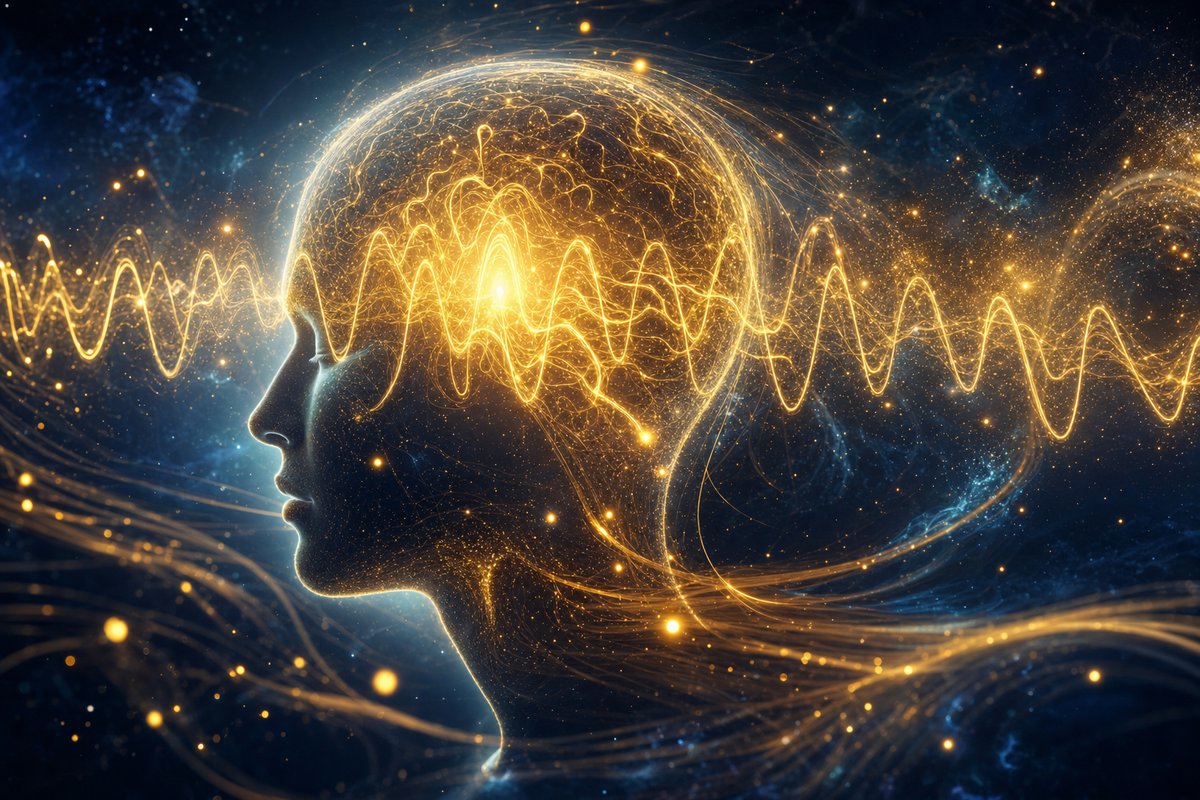
- 40 Hz is the signature frequency of the gamma band (30–100 Hz) — the brainwaves of focus, learning and perception
- MIT research on 40 Hz light and sound stimulation ('gamma sensory stimulation') made it the most studied brainwave frequency — promising but early science, not medicine
- Because 40 Hz is barely audible, it is delivered via binaural beats (headphones), isochronic pulses, or gamma-layered music
- Use gamma for study and deep work; use theta and delta for wind-down and sleep — match the band to the moment
- Our Gamma Waves 40 Hz and Brain Music 40 Hz playlists weave a 40 Hz layer under 432 Hz-tuned music
What Is the 40 Hz Frequency?
40 Hz sits at the heart of the gamma band — the fastest family of brainwaves (roughly 30–100 cycles per second), the rhythm your brain runs when it is deeply focused, learning, or binding perceptions together into a whole. Slower bands get most of the attention in relaxation circles: delta for deep sleep, theta for meditation, alpha for calm. Gamma is the other end of the dial — the frequency of the lit-up, integrated mind.



That is why 40 Hz has become the most researched number in the brainwave world — and the most searched.
The Science: Why 40 Hz Is Special
In 2016, MIT neuroscientists made an unexpected finding: exposing mice to light flickering at exactly 40 Hz stimulated gamma activity and appeared to reduce amyloid plaques in the brain. Follow-up work added 40 Hz sound to the protocol, and early human trials of this “gamma sensory stimulation” are ongoing. It is genuinely promising research — and it is also early: these are studies, not treatments, and listening to 40 Hz audio is a wellness practice, not medicine.
What the research does make plausible is the everyday experience listeners report: 40 Hz sessions feel sharpening — good for study blocks, deep work, and mental fog — where a delta or theta session feels softening.
How to Listen to 40 Hz
Since 40 Hz is at the very bottom edge of human hearing, most 40 Hz audio delivers the rhythm indirectly:
Binaural beats: one tone in each ear, 40 Hz apart — your brain perceives the 40 Hz difference. Headphones required. Try it free in our binaural beats generator (Gamma 40 Hz preset).
Isochronic pulses: a tone switched on and off 40 times per second — works on any speaker. Our isochronic generator has it one tap away.
Gamma-layered music: full compositions with a 40 Hz layer woven underneath — the easiest way to sustain a long session, because it is simply good music to work to. That is exactly what our gamma playlists below are.
Listen: Our 40 Hz Gamma Music
Both playlists below are composed with an embedded 40 Hz gamma layer under 432 Hz-tuned music — made for focus blocks, study sessions and clearing mental fog. They also live as full guides with players at Gamma Waves 40 Hz and Brain Music 40 Hz.
40 Hz vs the Slower Brainwaves
Think of it as a dial, not a competition. Delta (0.5–4 Hz) is deep sleep — our delta generator covers it. Theta (4–8 Hz) is meditation and drift — hear it in our Theta Waves playlist. Alpha (8–13 Hz) is relaxed alertness. Gamma (40 Hz) is full engagement. The skill is matching the band to the moment: gamma for the morning study block, theta for the evening wind-down, delta for the night. If you have an ADHD brain, gamma work is especially relevant — our ADHD music therapy guide covers why.
Frequently Asked Questions
What does 40 Hz do to the brain?
40 Hz matches the brain’s gamma rhythm — the frequency band active during focus, learning and perception-binding. Rhythmic 40 Hz stimulation (light or sound) has been shown in research settings to entrain gamma activity; listeners typically use it for concentration and mental clarity.
Is 40 Hz the same as gamma waves?
40 Hz is the signature frequency within the gamma band (roughly 30–100 Hz) — the specific rate most gamma research uses, and the one most gamma audio is built around.
Do I need headphones for 40 Hz?
For binaural delivery, yes. For isochronic pulses or gamma-layered music, any decent speaker works — though headphones deepen the effect.
When should I listen to 40 Hz music?
During tasks that need sharpness: studying, deep work, reading, problem-solving. It is the opposite of a sleep frequency — keep it out of the bedtime routine and let delta and theta handle the night.