

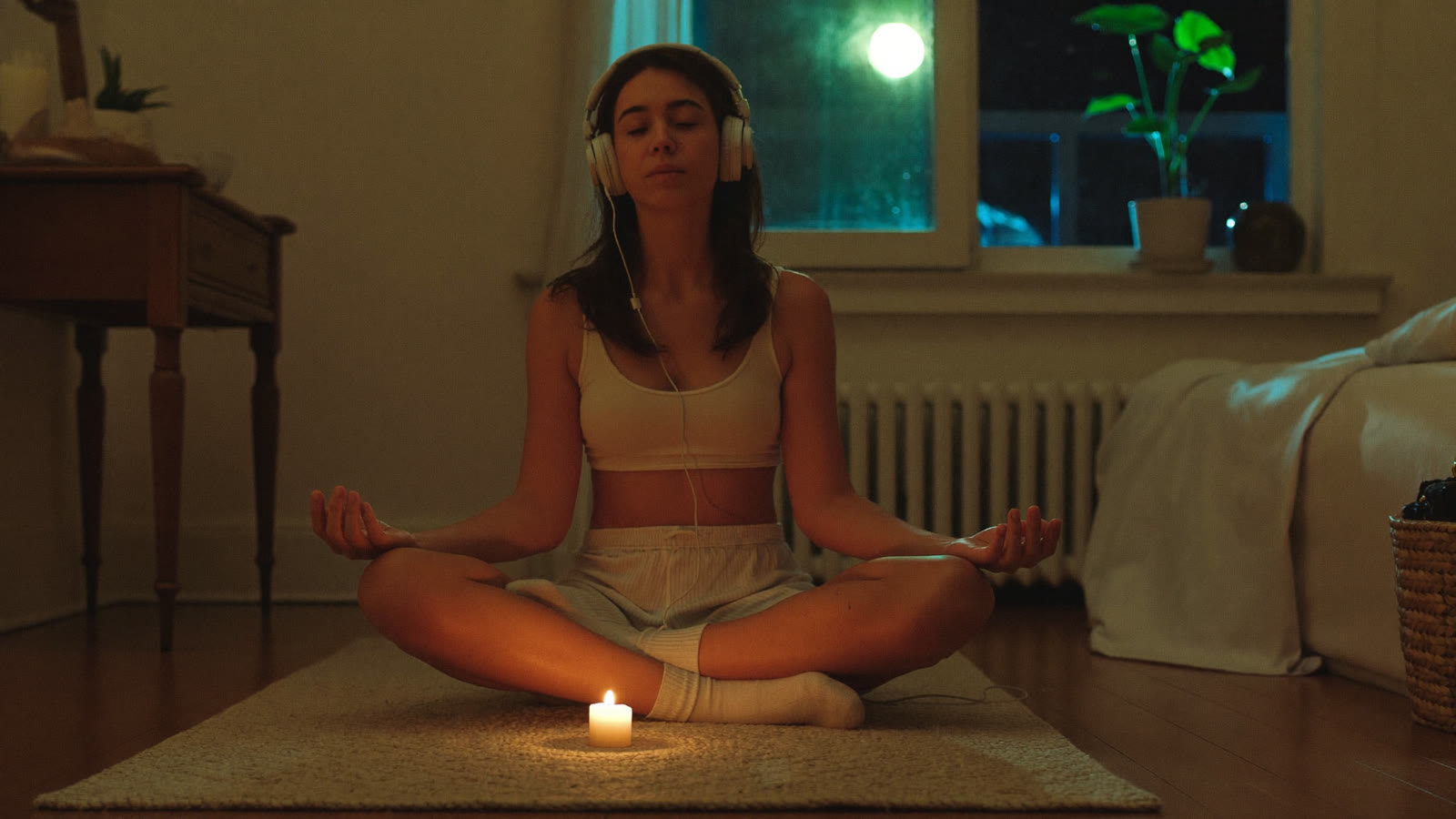
- Research (including randomized trials of mindfulness programs) shows meditation moderately improves ADHD attention, working memory and emotional regulation
- The catch: standard formats assume the skills ADHD lacks — start with 2–5 minutes, not 20
- Every time you notice the mind wandered and return, that IS the exercise — ADHD minds get more reps, not worse results
- ADHD-friendly doors: guided audio, walking meditation, breath-counting, and sound-anchored practice (a steady tone or music as the attention object)
- Consistency beats duration: five daily minutes outperforms a weekly half-hour
What the Research Actually Says
The evidence is real and modest-to-encouraging: mindfulness-based programs (like MAPs — Mindful Awareness Practices, developed partly for ADHD) have shown improvements in attention, working memory, and especially emotional regulation in adolescents and adults with ADHD, including in randomized trials. Meta-analyses agree the effect is moderate — meditation is not a replacement for treatment, but it reliably strengthens exactly the muscles ADHD taxes most: noticing where attention is, and moving it back on purpose without drama.
That last sentence is the whole secret, so here it is plainly: meditation is not the absence of mind-wandering — it's repetitions of noticing-and-returning. An ADHD brain wanders more, which means it gets more reps per session. The ADHD meditator isn't failing at meditation; they're doing the high-volume version.
Why the Classic Format Fails ADHD (and What to Do Instead)
'Sit motionless in silence for twenty minutes' front-loads everything ADHD struggles with — stillness, no stimulation, long duration, no feedback. Change the format, keep the mechanism:
Start embarrassingly small
Two minutes. Literally. A daily two-minute sit you actually do beats the twenty-minute ideal you avoid. Extend only when the current length feels easy for a week.
Use a guide
Guided meditations externalize the structure — the voice keeps pulling you back, so the session doesn't depend on self-monitoring, ADHD's weakest link. Any beginner track works; keep the same one for a while (novelty is the enemy of the anchor).
Anchor to sound, not silence
Silence gives an ADHD mind nothing to hold. A steady sound — a continuous tone from our 432 Hz tone generator, or slow instrumental music — is a physical anchor attention can rest on and return to, the same principle behind sound-based focus (the playlist below is built as a meditation bed). Attend to the texture of the sound itself; when the mind leaves, come back to the sound. That's the whole practice.
Move
Walking meditation — attention on footfalls, 10 minutes, phone at home — is fully legitimate mindfulness and often the ADHD favorite, because rhythm feeds the stimulation need while the practice trains the returning. Slow swimming and mindful chores work identically.
Count with a cap
Breath-counting one to ten, restart on ten or on losing count. The counting adds just enough task-structure to hold on to; losing count isn't failure, it's the bell that says 'return' — which is a rep.

A Realistic ADHD Meditation Week
Days 1–7: two minutes daily, guided or sound-anchored, right after an existing habit (coffee, brushing teeth — habit-stacking survives ADHD forgetting better than schedules). Week two: three to five minutes, same anchor. Week three onward: add one 10-minute walking session on a weekend. Track only one metric: did it happen. If a day fails, the streak isn't broken — ADHD-proof systems don't have breakable streaks, only next days.
Pair the habit with the same audio every time and the sound itself becomes a conditioned cue for the meditative state — after a few weeks, the first notes start settling you before you've 'done' anything. That conditioning effect is the same one we use in our ADHD night wind-down.
This article supports wellbeing — it is not medical advice, and it is not a substitute for diagnosis or treatment. If ADHD symptoms are significantly affecting your life, a clinician who knows ADHD is the right next step.
Frequently Asked Questions
Does meditation work for ADHD as well as medication?
No — and honest framing matters. Medication effects on core symptoms are typically larger. Mindfulness is a strong complement: research shows meaningful gains in attention control and emotional regulation, with none of the format needing to conflict with any treatment plan. Think 'strength training for the attention system,' not 'replacement.'
How long should someone with ADHD meditate?
Start at two to five minutes daily. The research programs that worked used regular short daily practice building over weeks. Duration is the least important variable; daily-ness and a consistent anchor (guide, sound, footsteps) are the ones that predict sticking with it.
What kind of meditation is best for ADHD?
Whichever one you'll repeat: guided mindfulness, walking meditation, breath-counting, or sound-anchored practice with a steady tone or slow music. All train the same notice-and-return mechanism; the format just needs to supply enough structure and stimulation for an ADHD system to stay in the room.
From our studio · Calm & Sleepy
ADHD Focus Music — Steady, non-distracting sound for locked-in work.