

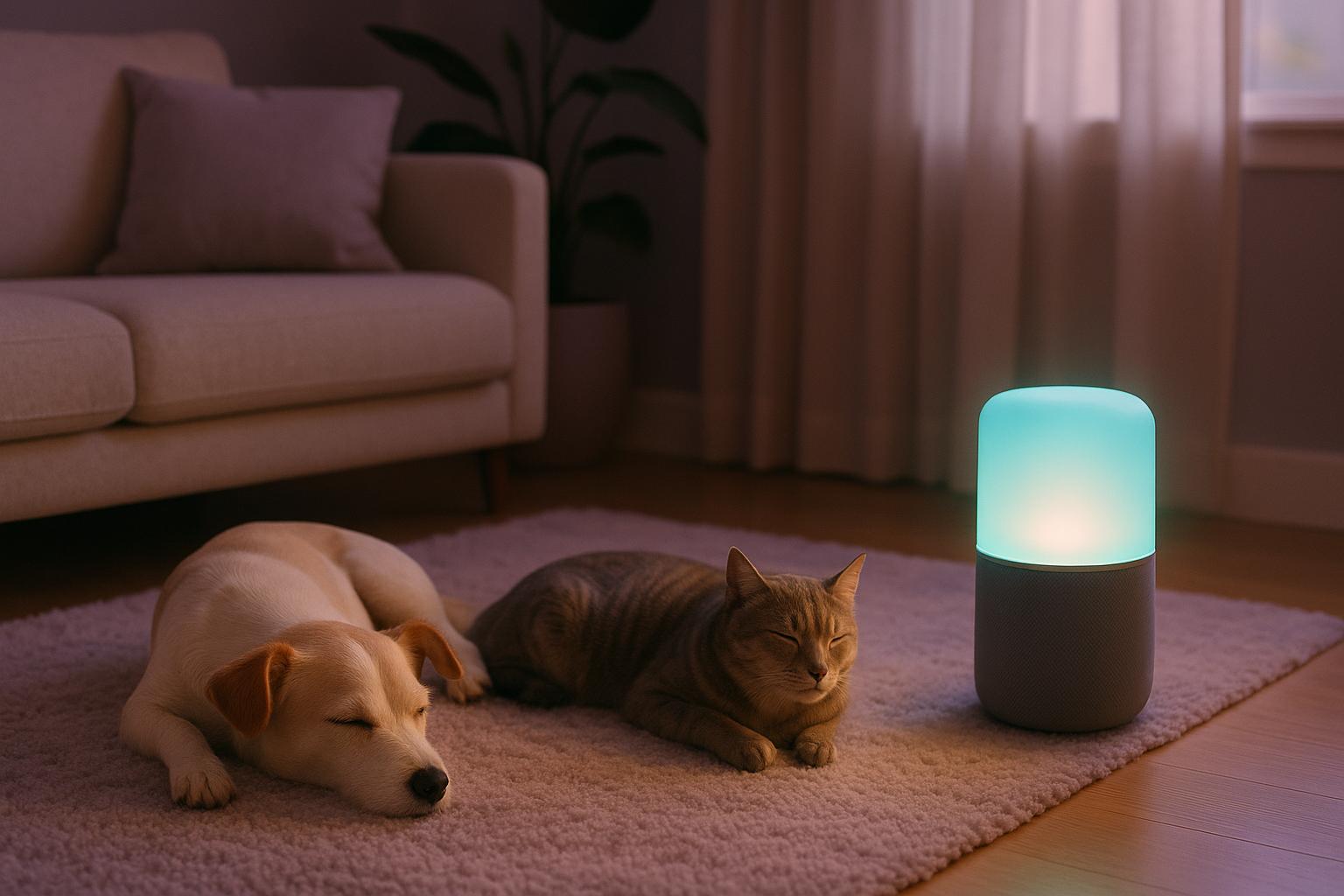
- Sound therapy calms a pet's nervous system by shifting it toward the parasympathetic, rest-and-digest state.
- Frequencies like 528 Hz and 417 Hz are especially effective for soothing anxious pets and easing emotional distress.
- Playing calming music 15 to 30 minutes before a known stressor, such as a thunderstorm or vet visit, helps ease a pet's nerves.
- Research cited by Dr. Heather Loenser shows healing frequency music can calm dogs within five minutes.
- Signs sound therapy is working include deeper sleep, less pacing, lower pulse rates, and reduced cortisol levels.
- Holistic pet health coach Denise Bozenski recommends 432 Hz and 528 Hz for general relaxation and 396 Hz or 417 Hz for trauma recovery.
If your pet gets anxious during thunderstorms, vet visits, or when left alone, sound therapy might help. Using specific sound frequencies, this method calms their nervous system and reduces stress. Here’s what you need to know:



- What it Does: Healing frequencies like 528 Hz and 417 Hz promote relaxation by interacting with your pet’s natural sensitivity to sound vibrations.
- When to Use: Play calming music before, during, or after stressful events like fireworks or travel. Daily use can also lower overall anxiety.
- How to Start: Create a quiet, comfortable spot for your pet. Use pet-specific playlists from platforms like Spotify or YouTube at a moderate volume.
- What to Watch For: Signs like deeper sleep, less pacing, and calmer behavior indicate it’s working.
Sound therapy is easy to incorporate into your pet’s routine and can make a noticeable difference in their stress levels.
How Healing Frequencies Affect Pet Anxiety
When pets are exposed to calming sounds, the vibrations interact with their body, mind, and nervous system in a way that promotes relaxation and ease. This natural connection is why certain sound frequencies can play a role in reducing anxiety in pets.
These sound waves engage with your pet's biology, triggering cellular responses that help lower stress levels and enhance overall well-being.
Let’s dive into the science behind how this works.
The Science Behind Healing Frequencies
Healing frequencies rely on specific tones and vibrations to encourage a state of relaxation within the nervous system, known as the parasympathetic state. In this state, pets can experience a deeper sense of calm, which supports their natural healing processes and enhances comfort.
When a pet feels anxious, their nervous system becomes overstimulated. Healing frequencies help counterbalance this by promoting a physiological shift toward relaxation, allowing the body to return to a more balanced and efficient state.
Why Pets Respond to Healing Frequencies
Pets are naturally attuned to sound vibrations, and their bodies instinctively respond to soothing tones. This sensitivity allows the calming frequencies to ease stress and encourage relaxation. By gently shifting their state of mind, sound therapy becomes a simple yet effective way to help manage pet anxiety.
Common Pet Anxiety Triggers and How Sound Therapy Helps
Helping your pet feel calm and secure starts with understanding what makes them anxious. Once you pinpoint their triggers, you can use sound therapy to create a soothing environment.
Identifying Anxiety Triggers
Every pet is different, but some anxiety triggers are pretty common. These include separation from their owner, loud noises like thunderstorms, fireworks, or household appliances, travel-related stress, vet visits, and changes in routine - such as being in a new environment or meeting unfamiliar people or animals.
Pay attention to your pet’s body language. Signs like flattened ears, a tucked tail, heavy panting, or dilated pupils are clear indicators that they’re feeling stressed.
Recognizing these triggers is key to timing sound therapy effectively.
When to Use Healing Frequencies
Once you know what sets off your pet’s anxiety, you can use healing frequencies to help them stay calm. Timing is everything.
- Before stress kicks in: Start playing calming frequencies 15–30 minutes before a known stressor, like a thunderstorm or a trip to the vet. This helps ease their nerves before the situation escalates.
- During stressful events: Keep the sound therapy going at a moderate volume to maintain a soothing atmosphere. For triggers like fireworks, start the playback as soon as you notice the first signs of stress.
- Daily use: Incorporating healing frequencies into your pet’s everyday routine can lower their overall anxiety levels. Play calming sounds during quiet moments - when they’re resting, eating, or winding down for the night. This consistent exposure creates a sense of calm that makes them better equipped to handle unexpected stress.
Sound therapy can also be a great tool during transitions, like moving to a new home or welcoming a new family member. You can even use it during activities your pet might not love, like grooming or nail trims. The consistent, calming tones help your pet associate these moments with relaxation instead of fear.
For the best results, keep the volume moderate and place speakers in areas where your pet spends most of their time. Over time, they’ll build a strong connection between the sounds and a sense of safety.
Key Healing Frequencies for Pet Anxiety
Sound therapy can be a gentle yet effective way to ease your pet's anxiety. Each frequency has unique benefits, offering targeted relief by calming their nervous system. Let’s dive into some of the most impactful frequencies for soothing anxious pets.
528 Hz: A Calming and Transformative Tone
Known as a frequency that encourages transformation, 528 Hz is celebrated for its ability to reduce stress and promote relaxation in pets. This tone is particularly effective in calming their nervous system, helping them find peace during tense moments. It’s a great choice for fostering a sense of stability and comfort.
"For general relaxation, 432 Hz and 528 Hz are excellent for calming a dog's nervous system." - Denise Bozenski, certified holistic pet health coach and founder of Revive & Thrive Canine Wellness
852 Hz: Restoring Peace and Balance
The 852 Hz frequency works wonders in creating a sense of inner peace. It helps restore harmony and supports your pet in regaining their natural rhythm. This soothing soundscape can be especially helpful in creating a serene environment for your furry friend.
417 Hz: Easing Emotional Distress and Clearing Negativity
417 Hz is known for its ability to clear negative energy and support emotional healing. This frequency is ideal for pets who may be recovering from distress or trauma, helping them feel more grounded and secure.
"For dogs recovering from emotional trauma or stress, 396 Hz or 417 Hz may help them settle into a more grounded, balanced state." - Denise Bozenski, certified holistic pet health coach and founder of Revive & Thrive Canine Wellness
How to Use Healing Frequency Music for Your Pet
Introducing healing frequency music to your pet is easier than you might think. The key is to create a serene environment and ease them into the experience so they can fully enjoy the calming effects. Here's how you can make sound therapy a part of your pet's routine.
Setting Up the Listening Environment
The space where your pet listens to healing frequencies is just as important as the music itself. Pets don't just hear sound - they feel it too. Start by minimizing background noise, like the TV, kitchen appliances, or any sudden loud sounds, which can disrupt the calming atmosphere.

Choose a spot your pet already loves, like their bed, a cozy corner, or even their crate. Position the speakers at their level to create an immersive sound experience that's soothing but not overwhelming. The goal is to encourage relaxation through a peaceful auditory environment.
Keep the volume at a comfortable level - clear enough to hear but soft enough to avoid startling your pet. Think of it as gentle background music, not a concert. If you find yourself needing to raise your voice to be heard, the volume is too high.
For the best results, use high-quality frequency music specifically designed for pets, such as tracks tailored to dogs or cats. These often feature tempos, frequencies, and instruments that align with their natural calming needs. If you're using a phone or tablet, place it near your pet's resting area, but not so close that it becomes intrusive.
Incorporating Healing Frequencies into Daily Life
Once you've set up a relaxing space, the next step is to weave healing frequencies into your pet's daily routine. Regularity is key - it helps your pet associate the music with relaxation. Play the music during natural downtime, like their afternoon nap or evening wind-down, so they start linking the sounds to calm moments.
This music can be especially helpful during stressful situations, such as after a vet visit, during car rides, or when they're left home alone. For anticipated stressors like thunderstorms, start playing the music 15–20 minutes beforehand to help ease their nerves.
Healing frequency music also pairs beautifully with massage or gentle bodywork. The combination of soothing touch and calming sound can create an incredibly relaxing experience for your pet. Aim for sessions of 30–60 minutes daily, adjusting the duration based on how your pet responds.
As you establish this routine, keep an eye on how your pet reacts to the music over time.
Observing Your Pet's Response
Pay close attention to your pet's behavior, especially during the first few sessions. Introduce the music gradually, particularly if your pet is sensitive to sound.
Look for signs of relaxation, like less pacing, deeper sleep, or a quicker ability to settle down. Biometric studies have shown that species-specific music can lead to lower pulse rates, better heart rate variability, and reduced cortisol levels, all of which point to decreased stress.
Some pets respond almost immediately. In fact, research shows that healing frequency music can calm dogs within five minutes.
"The frequencies are designed to calm down dogs and it's clinically proven to work within five minutes." - Dr. Heather Loenser, Chief Veterinary Officer, Suveto
If your pet seems uneasy, try lowering the volume or experimenting with different frequencies. Not all pets respond the same way - while one may relax with 528 Hz, another might prefer 417 Hz.
To figure out what works best, consider keeping a simple log. Jot down the date, the frequency you used, the duration of play, and any changes in your pet's behavior. Over time, you may notice patterns that help you fine-tune the experience for your furry friend.
Finding and Accessing High-Quality Healing Frequency Music
Once you've created a calming auditory space for your pet, the next step is finding reliable sources of healing frequency music designed for easing pet anxiety.
Curated Playlists and Streaming Platforms
Platforms like Spotify, Apple Music, and YouTube offer a variety of curated playlists and extended sessions from creators like Healing Miracle Frequencies. These can range from short tracks to sessions lasting up to 10 hours - ideal for playing throughout the day or overnight.
When searching, try keywords like "pet anxiety," "dog calming music," "cat relaxation," or specific frequencies such as "528 Hz for pets." Many playlists specify the frequencies they use and the types of anxiety they target, such as separation anxiety, storm fears, or general nervousness.
The biggest perk of using mainstream streaming services is convenience. Most pet owners already have subscriptions to platforms like Spotify or Apple Music, and YouTube offers free access - though occasional ads may interrupt playback.
Once you've identified a few playlists or channels, it's important to evaluate the quality of the music before relying on it for your pet's relaxation.
How to Evaluate Music Quality
Not all tracks marketed as "healing music" are genuinely effective. To ensure you're choosing therapeutic options, look for playlists or tracks that provide clear details about their frequencies and intended effects. High-quality creators often explain the specific frequencies used, how the music is tuned, and the therapeutic goals of each track. If these details are missing or vague, it could indicate a lack of authenticity.
Pay attention to the sound itself. Healing frequency music should have a clear, balanced tone with minimal background noise. If nature sounds like birdsong or rain are included, they should blend seamlessly with the frequencies, enhancing the calming effect rather than overpowering it. Tracks that sound harsh, overly complex, or poorly mixed may do more harm than good.
Audio production quality matters, too. Poorly produced tracks can inadvertently stress your pet instead of soothing them. Look for reviews or feedback from other pet owners, especially comments about noticeable improvements like reduced barking, better sleep, or calmer behavior during stressful events.
If you're exploring platforms like Healing Miracle Frequencies, you can trust that their music is specifically designed for therapeutic purposes, making it easier to find effective options. For YouTube content, check the creator's credentials and whether they specialize in sound therapy to ensure you're accessing reliable, well-crafted music.
Ultimately, your pet's reaction will be the most reliable indicator of the music's effectiveness. Even with perfectly tuned tracks, not every pet will respond the same way. If your furry friend seems indifferent or uneasy, try experimenting with different frequencies, tempos, or artists until you find the combination that works best for them.
Conclusion
Healing frequencies offer a natural way to ease pet anxiety and help them find a sense of calm. Frequencies like 528 Hz and 417 Hz are particularly effective at soothing a pet's nervous system and reducing stress.
Consistency is key. By understanding how healing frequencies work, you can fine-tune their use to maximize their calming effects. As Denise Bozenski points out, selecting the right frequency can turn a restless pet into a relaxed one during stressful times. Pay attention to your pet's reactions - some may respond quickly, while others might need repeated exposure to feel the benefits.
To make the most of these frequencies, incorporate them into your pet's routine in practical ways. Play calming frequency music during rest periods, after walks, or even overnight. These sounds can also be a great tool during stressful events like thunderstorms, fireworks, or vet visits. The more your pet hears these soothing tones, the more their nervous system will associate them with safety and relaxation.
Watch for signs like deeper sleep, reduced anxiety, and calmer behavior. These cues will guide you in making any necessary adjustments to the frequency, volume, or duration of the sound therapy.
Frequently Asked Questions
How can I figure out which healing frequency is best for calming my pet's anxiety?
Every pet has its own personality, so finding the right calming sounds for your furry companion might take a bit of trial and error. A good starting point is to use frequencies like 432 Hz or 528 Hz, which are often associated with relaxation. If your pet seems to be dealing with deeper emotional stress, you might explore sounds at 396 Hz or 417 Hz, as these are believed to aid in emotional release and balance.
Observe how your pet responds when you play these sounds, especially during stressful situations like thunderstorms or trips to the vet. The right frequency will likely be the one that helps your pet appear more at ease, calm, or relaxed. For the best results, consider making these calming sounds a regular part of your pet's daily routine.
Can I use healing frequencies along with my pet’s anxiety medications or other treatments?
Yes, you can often use healing frequencies alongside your pet's current anxiety treatments or medications. Sound therapy offers a gentle, natural way to support your pet's emotional health and can work well with other approaches. That said, it’s always wise to check with your veterinarian before adding any new therapies to your pet’s care plan to make sure everything aligns with their medical needs.
What can I do if my pet doesn’t seem to respond to calming frequencies?
If your pet doesn’t seem to react, try tweaking the volume - either lowering it or raising it slightly - since some pets are more sensitive to sound than others. You could also explore different sound frequencies, like 432 Hz or 528 Hz, which are often associated with relaxation. Alternatively, consider using calming tools such as tuning forks or singing bowls to discover what resonates best with your pet.
Remember, every pet has its own preferences, so finding the right method might require a bit of experimentation. If you’re not seeing any improvement, it might be helpful to reach out to a holistic pet care expert for tailored advice.
How loud should I play healing frequency music for my pet?
Keep the volume at a comfortable, moderate level - clear enough to hear but soft enough that it never startles your pet. A good rule of thumb is that if you need to raise your voice to be heard over the music, it is too loud. Position speakers at your pet's level in the area where they spend the most time so the sound feels gentle and immersive rather than intrusive.
How long does it take to see results from sound therapy for pets?
Some pets relax almost immediately, and research suggests healing frequency music can calm dogs within five minutes. For others, the calming benefits build gradually with repeated, consistent exposure over days or weeks. Keeping a simple log of the frequency, volume, duration, and your pet's behavior can help you spot patterns and fine-tune the routine for lasting results.
Listen while you read
Sound Bath Music — Lie down and let the sound do the work. Streams free in your browser, no app, no sign-up.