
- "Sleep music frequency" refers to three separate things: a tuning (432 Hz means the note A is pitched at 432 Hz instead of the standard 440 Hz), a pure tone (a single sustained frequency such as 174 Hz or 528 Hz), and a beat frequency (the slow pulse of a binaural or isochronic track, counted in single digits).
- Beat frequencies for sleep sit in two bands — theta between 4 and 8 Hz for the drift-off window, and delta between 0.5 and 4 Hz for the deep hours — and the number is always stated separately from the carrier tone you actually hear.
- A binaural beat exists only as the difference between what each ear receives, so it requires headphones; 432 Hz music, pure tones and isochronic pulses all work through a bedside speaker.
- Sleep runs in cycles of roughly ninety minutes, with the deepest stretches concentrated in the first half of the night, which is why a theta-then-delta order fits the night better than one track on repeat.
- Keep any sleep frequency well below conversation level, and choose a low carrier tone — roughly 100 to 250 Hz — because a bright, high tone keeps attention up when the point is to let it drop.
- A track title is not proof of its tuning or its beat: read the label for the stated numbers, and treat any track that names only a musical key as music for bedtime rather than as a tone or a beat.
Three Different Numbers Hide Behind "Sleep Music Frequency"
Ask for a sleep music frequency and you will be handed numbers that have almost nothing to do with each other. One track promises 432 Hz. The next offers 528 Hz. A third says "2 Hz delta", and a fourth says "6 Hz theta on a 180 Hz carrier". These are not competing answers to one question — they are three different kinds of number, describing three different things a recording can be. Once you can tell them apart, choosing what to play at eleven at night stops being guesswork and becomes a simple decision with three clear options.



Here is the short version: a tuning describes the whole piece of music. A pure tone is a single sustained note with nothing else in it. A beat frequency is a slow pulse laid inside a tone. All three belong in a night. They just belong at different hours, and at different volumes, and — in one case — only through headphones.
A tuning: 432 Hz music
When a track is labelled 432 Hz, the number is a reference pitch. Standard concert tuning puts the note A above middle C at 440 Hz; 432 Hz tuning pitches that same A a little lower, and every other note in the piece shifts with it. Nothing about the music is a single frequency — there are still chords, still melody, still whatever instruments the piece uses. It is simply built on a lower foundation, and the result sits warmer and rounder in the room. This is the most listenable of the three: it is real music, it works on a speaker, and it holds up in the hour before bed when you are still moving around, reading, brushing your teeth. Our guide to 432 Hz music for sleep goes deeper into what this tuning does to a night.
A pure tone: 174 Hz, 528 Hz and the solfeggio numbers
A pure tone is one sustained frequency and nothing else — the sound of a single steady note held indefinitely. The solfeggio numbers live here: 174 Hz, the low foundation tone; 396 Hz; 528 Hz, long known as the love frequency; 639 Hz; 741 Hz; 852 Hz; 963 Hz. Because a pure tone has no rhythm and no melody, there is nothing for attention to follow, which is exactly why listeners reach for it at night. The trade-off is that a bare tone can feel exposed, so most sleep recordings soften it with a pad underneath or a hush of noise around it. Pitch matters more than people expect: the low tones sit comfortably under a sleeping room, while the high ones are bright and better suited to a daytime practice. If you want the full map of these numbers, the complete list of solfeggio frequencies lays them out in order.
A beat frequency: delta and theta, counted in single digits
The third number is the smallest and the most often misread. When a track says "2 Hz" or "6 Hz", that is not a pitch — nobody can hear a 2 Hz pitch. It is the speed of a slow pulse inside the sound, and the pitch you actually hear is a separate number called the carrier, usually somewhere between 100 and 250 Hz for sleep tracks. Two bands matter at night. Theta runs from 4 to 8 Hz and matches the drowsy, drifting minutes of falling asleep. Delta runs from 0.5 to 4 Hz — a swell roughly once or twice a second — and matches the slow, heavy rhythm of the deep hours. A binaural version of this pulse is built from the difference between the two ears, which means headphones; an isochronic version is baked into the recording itself and plays fine on a speaker. Our guide to binaural beats for sleep covers the headphone side in detail, and delta waves sleeping music describes the character of the slowest band.
Matching the Number to the Hour
A night is not one flat state, and that is the whole reason to own three options instead of one. Sleep moves in cycles of roughly ninety minutes. The first two or three are weighted toward the deepest stretches; the later ones lighten, with more dreaming and more brief surfacing between cycles. What settles you at half past ten is not what your body is doing at four in the morning. Split the night into four parts and give each one the number that suits it.
The wind-down hour: 432 Hz music
Start before you are in bed. In the hour when the lights come down and the phone goes on the nightstand, you want something with enough substance to hold a room but no hooks in it — and that is what 432 Hz music is for. Play it on a speaker at a level where conversation still wins. It slows the pace of the room, and it gives your evening a boundary: when the music starts, the day is over. This part of the night is where the sound is doing the least technical work and the most practical work, because it moves you toward bed on time. If bedtime itself is the thing that keeps slipping, how to fix your sleep schedule covers the light-based side of that reset.
Lights out: the first thirty minutes, theta or a low pure tone
Once you are horizontal with your eyes closed, the job changes. Now you want the sound to be featureless. Two good choices: a theta beat between 4 and 6 Hz, which gives a busy mind a slow, predictable pulse to rest on, or a low pure tone in the 100–200 Hz range, which gives it nothing at all. Both work. Which one suits you is a matter of temperament, and a week of alternating them will tell you. Set a thirty- to forty-five-minute timer; you will be asleep well before it ends. For the levers around the sound in this window — room temperature, light, what you did in the previous hour — how to sleep fast is the companion piece.
The deep hours: delta
The first half of the night carries most of your deep sleep, and delta is the number that matches it. A 1–3 Hz beat, long and unchanging, with a fade-in rather than an entrance, is the right shape here. Two ways to arrange it: queue a delta track behind your theta or pure-tone opener so the handover happens while you are already under, or start a long delta track from the beginning on nights when you fall asleep easily. Either way, choose length over variety — a track that runs sixty to a hundred and eighty minutes covers this stretch without a single transition to surface you. For what the body is actually doing in these front-loaded hours, what core sleep is explains it plainly.
The morning hours: lighter, or nothing
From roughly the fourth cycle onward, sleep lightens and dreaming takes over. A heavy delta swell no longer matches what the night is doing, and this is where listeners split three ways: a very soft theta track, a plain noise bed with no pulse in it, or silence. All three are legitimate, and the decision is worth making in advance rather than at five in the morning. If you want the later cycles to run longer, how to get more REM sleep lists the levers that sit outside the headphones.
Building the Sequence From the Sleep Music Playlist
The Sleep Music playlist holds all three kinds of track side by side — slow 432 Hz pieces, low sustained tones, and delta and theta beats — which makes it the simplest place to assemble a night. Work backward from the four parts above and pick one track for each. A 432 Hz piece for the wind-down. A theta beat or a low tone for lights out. A long delta track for the deep hours. Then decide whether anything plays after that.
Read the label on each track before you queue it, because the label is where the numbers live. A track that states a beat — "4 Hz theta", "2 Hz delta" — is telling you where in the night it belongs. A track that states a tuning is music, and belongs at the front. A track that names only a key or a mood is neither, and the title alone is never proof of a tuning or a beat: if a number is not stated, do not assume one. Order the four picks, save the sequence, and you have a night you can repeat without thinking.
If you would rather hear a tone or a pulse before you commit a whole night to it, The Frequency Studio generates all of them free in the browser — open the delta preset to hear the deep-rest pulse, theta for the drift-off range, or 528 Hz for a pure tone, with the carrier and beat under your fingers. Ten minutes with each, eyes closed, tells you more about which number your body settles into than any description can.
Volume, Speakers and Headphones
Quieter than you think
Every sleep frequency belongs well below conversation level — present if you listen for it, easy to forget if you do not. This is the single most common adjustment: a tone or a beat set at a comfortable daytime volume is loud enough at night to keep a thread of attention awake. Set it lower than feels right while you are still alert, because your hearing sharpens as the room goes quiet. If a beat ever feels too insistent, drop the volume before you change the number.
Which numbers need headphones
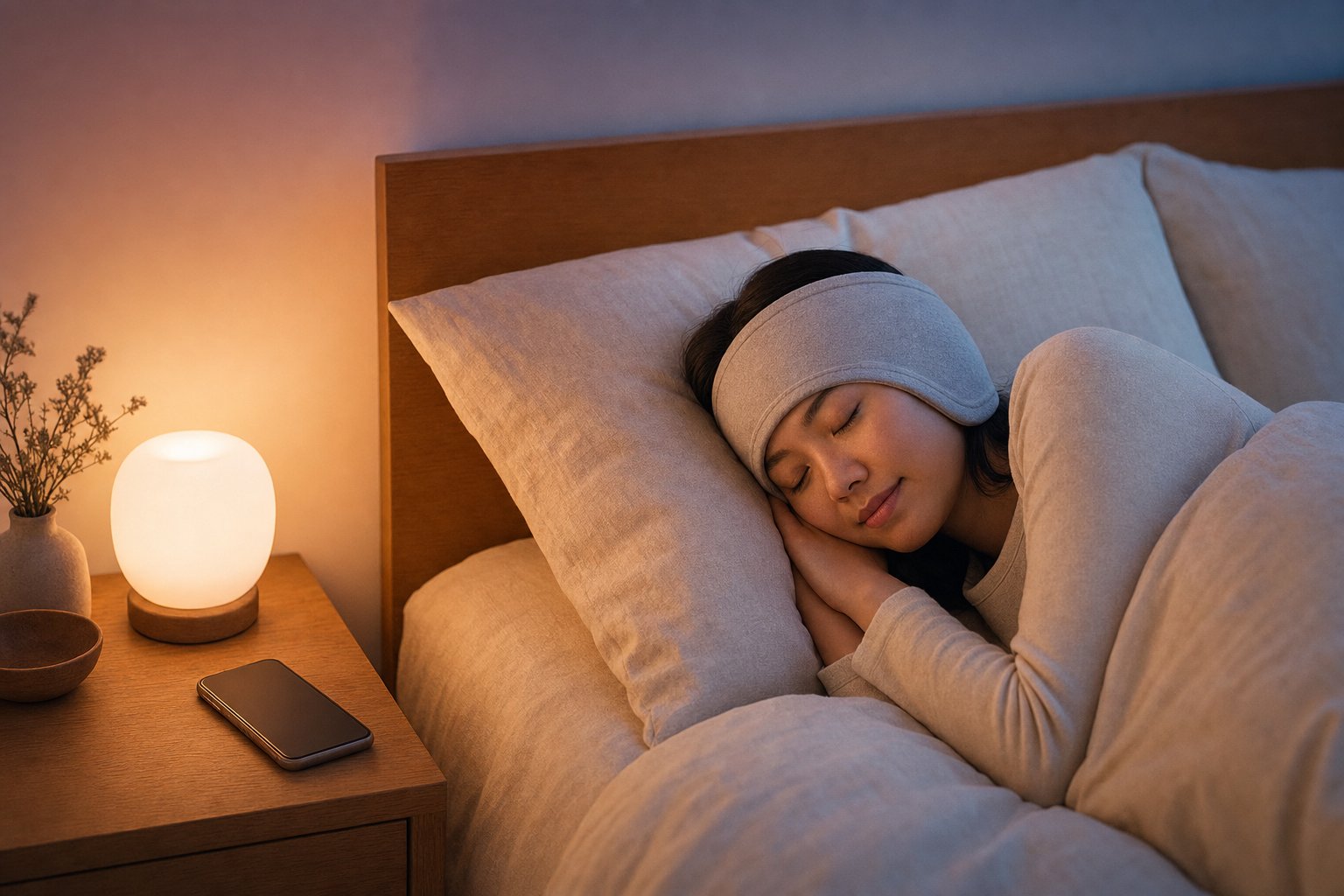
Only one. A binaural beat is created by the difference between what the left ear and the right ear receive, so through a speaker the difference collapses and you are left with a pleasant drone. Everything else — 432 Hz music, pure tones, isochronic pulses — plays perfectly well from a bedside speaker, which is the practical choice for anyone who cannot sleep in headphones. If you want the binaural version all night, a flat fabric sleep headband is the usual answer; side sleepers in particular should try one before committing.
Low carrier, always
When a beat track lists its carrier, keep it low: roughly 100 to 250 Hz feels warm and grounded in a dark room, while a carrier up in the high hundreds feels bright and alert. The carrier is the note you actually hear, so it does more to set the mood of a track than the beat number does. Many well-made sleep tracks tuck the carrier under a soft pad or a layer of noise so the tone never sits exposed.
A Seven-Night Listening Plan
Nights one and two — the wind-down only. Play a 432 Hz track on a speaker for the hour before bed and let the room go silent when you lie down. You are establishing the boundary, nothing else. Nights three and four — add the lights-out layer. Use a 4–6 Hz theta beat on night three and a low pure tone on night four, both at a low volume on a thirty-minute timer, and note in one line each morning which one you preferred. Nights five and six — add the deep hours. Queue a 1–3 Hz delta track behind whichever opener won, and check whether you noticed the handover; if you did, lower the delta volume or pick a track with a longer fade-in. Night seven — run the full sequence, start to finish, and decide what the morning hours get: soft theta, a noise bed, or silence. By the end of the week you are not guessing at a number any more. You have a routine with a reason behind every part of it.
What to Layer Underneath and On Top
A sleep frequency works best as one layer of a small stack rather than the whole of it. Underneath, a noise bed. Pink noise — the steady-rain hush described in our guide to pink noise for sleep — sits beautifully under a delta beat or a low tone, filling the gaps a bare frequency leaves and covering the household sounds that surface you between cycles. If you are choosing between colours, colors of noise explained compares them directly.
On top, breath. A slow breathing pattern over the lights-out window gives you two anchors instead of one, and a theta pulse makes an easy metronome for it — the 4-4-4-4 count in our guide to box breathing for calm lands comfortably on a 4–6 Hz beat. Keep the stack to three things at most: a frequency, a bed, a breath. Anything more becomes a project, and a project is the opposite of what the hour is for.
Frequently Asked Questions
What frequency is best for sleep music?
It depends which kind of number you mean. For the music itself, 432 Hz tuning is the one listeners reach for at bedtime because it sits low and warm in a room. For a sustained pure tone, stay low — somewhere in the 100 to 200 Hz range, or one of the lower solfeggio tones such as 174 Hz. For a beat frequency, use theta between 4 and 8 Hz while you are falling asleep and delta between 0.5 and 4 Hz for the deep hours. A single best number does not exist because the night has more than one part.
Is 432 Hz the same as a 432 Hz frequency tone?
No, and this is the most common mix-up. 432 Hz music is a tuning: the whole piece is pitched so that the note A lands at 432 Hz instead of the standard 440 Hz, and it still has chords, melody and instruments. A 432 Hz tone is a single sustained note at that frequency with nothing else in it. Both belong at night, but they sound completely different — the music for the wind-down hour, the tone for lights out.
Should I play sleep music all night or use a timer?
Both work, and the choice follows what you queued. For the wind-down and the lights-out window, a thirty- to forty-five-minute timer is plenty — you will be asleep before it runs out. For the deep hours, either a long delta track or a queue that continues covers the stretch. The part worth deciding in advance is the morning: pick soft theta, a noise bed, or silence, and set the playlist to match, rather than letting a heavy pulse run into cycles it no longer fits.
Do I need headphones for sleep music frequencies?
Only for binaural beats, which exist purely as the difference between what each ear receives and collapse into a drone on a speaker. 432 Hz music, pure tones and isochronic pulses all play fine from a bedside speaker. If you want a binaural pulse through the night, a flat fabric sleep headband is the comfortable option; otherwise use the headphone track for the falling-asleep window only and switch to a speaker afterwards.
How do I tell what frequency a track actually is?
Read the label, not the title. A properly described track states its numbers separately: the tuning, the carrier tone, and the beat frequency. A beat is always a single-digit or low number — 2 Hz, 6 Hz — while a carrier or a pure tone runs in the hundreds. If a track names only a mood, a key or a colour, treat it as music for bedtime rather than as a tone or a beat, and do not infer a tuning from the name alone.
Can I use one track for the whole night?
You can, and plenty of listeners do — a long, low pure tone or a single delta track will carry a night perfectly well. The reason to build a sequence instead is that the night changes shape: the first half is weighted toward the deepest sleep and the second half toward lighter, dream-rich cycles. A theta-then-delta order follows that shape, and the seven-night plan above is the quickest way to find out whether the difference is one you notice.