
- The "brain massage" sensation comes from three separate settings, not from a track title: the beat rate in single hertz, the carrier tone between roughly 100 and 400 Hz, and how far the sound moves between the left and right ear.
- A binaural beat is the difference between what each ear receives — two tones at 198 Hz and 204 Hz produce a 6 Hz pulse — so it exists only in headphones with both sides at matched volume and spatial audio switched off.
- Slow rates feel physical because they move at body tempo: a 2 Hz delta beat swells roughly twice a second, close to a resting pulse, while anything above 12 Hz reads as a tick rather than a sweep.
- Delta from 0.5 to 4 Hz suits lights out and a file left running, theta from 4 to 8 Hz suits the wind-down hour and a lying-down body scan, and alpha from 8 to 12 Hz suits a twenty-minute daytime reset.
- Carriers between 100 and 250 Hz give the heavy, pressing version of the effect; brighter carriers above 300 Hz float instead, and the beat volume belongs under the sound of the room rather than above it.
- An isochronic pulse switches a single tone on and off at the chosen rate, so the rhythm sits inside the file and survives any speaker — the version to use when headphones are not an option.
A "Brain Massage" Is Three Settings, Not a Track Title
"Brain massage" is the phrase listeners reach for when a slow binaural beat lands properly: a soft pulse that seems to swell behind the forehead and drift from one side of the head to the other, loosening the grip of a day that will not switch off. Nothing in the recording touches you. What you are feeling is rhythm and movement — and both come from settings you choose before you lie down, not from a title someone typed into an upload box.
Three layers build the sensation. The beat rate sets the pace of the swell: slow numbers feel like breathing, fast numbers feel like a tick. The carrier sets the weight — a low, round tone presses, a bright tone floats. The stereo field sets the movement, and it is the layer most people miss: a beat pinned dead centre reads as a hum, while one that drifts slowly across the stereo picture reads as something being drawn across the back of your skull. Get all three right and the effect arrives inside the first minute.
What follows is a listening routine for the hour before sleep, built on the Sleep Music playlist with a beat underneath it. You can generate the beat yourself free in The Frequency Studio: open the theta preset, pull the carrier low, and slide the beat rate down until the pulse stops sounding like a rhythm and starts sounding like a slow tide.

The pulse exists only between two ears
One fact decides the whole setup. A binaural beat is the difference between what your left ear receives and what your right ear receives — two steady tones a few hertz apart, say 198 Hz and 204 Hz, resolving into a 6 Hz pulse that neither tone contains. Play that through a speaker and both channels reach both ears, the difference collapses, and the pulse flattens into a pleasant drone. So: headphones or earbuds, both sides at matched volume, spatial audio and head tracking switched off, no mono mixes. Earbuds work as well as over-ears; what matters is that each ear keeps its own channel. Our guide to listening to binaural beats correctly covers the rest of the setup in detail.
Why the slow rates feel physical
The massage impression belongs to the bottom of the range, and the reason is tempo. A 2 Hz delta beat swells roughly twice a second, close to a resting pulse; a 1 Hz beat is slower than most people breathe. At that pace your attention stops counting the rhythm and starts riding it, which is when the pulse reads as pressure and movement rather than sound. Push past about 12 Hz and the same beat turns into a flutter — interesting, alert, not remotely like being worked on. If the sensation you are chasing is the heavy, travelling one, the number you want has one digit before the decimal point.
Pick the Beat Rate for the Hour You Are In
A single file on repeat serves a whole evening badly, because 9 p.m. and lights out ask for different things. Choose the band from the hour, then choose the track from its label.
Delta, 0.5–4 Hz: lights out and the long hold
Delta is the slowest band in regular use and the one that produces the deepest version of the effect. At 2 Hz the beat is barely a rhythm — a long swell you feel more than hear — and at 1 Hz it stretches further still. This is the rate for the file you leave running after you stop listening on purpose: flat on your back, lights off, carrier low and warm, nothing on top. Sliding into sleep partway through is the point rather than a failure, so the file should outlast you. For a fuller map of which part of the night takes which rate, binaural beats for sleep walks through the hours one by one.
Theta, 4–8 Hz: the wind-down hour
Theta runs from 4 to 8 Hz and feels slow and loose while you are still awake at the edges — the band that suits the half hour before bed, a lying-down body scan, or a long-exhale practice on the floor. A 6 Hz beat sits at the natural centre and is the best place to start if you only ever keep one number. Theta is also the rate that pairs most comfortably with music underneath it, because the swell is slow enough to sit beneath a melody without fighting it. For the seated, eyes-closed version of the same band, our binaural beats meditation guide maps the sits.
Alpha, 8–12 Hz: the twenty-minute daytime reset
Alpha between 8 and 12 Hz is calm and wide awake. The sensation here is lighter — less pressure, more of an even wash — which is exactly right for the twenty minutes you take between two hard tasks and have to get up from. A 10 Hz beat on a brighter carrier leaves you level and clear. A delta beat at three in the afternoon leaves you heavy for an hour, so keep the slow numbers for the evening.
Leave beta and gamma out of the night
Beta between 13 and 30 Hz and 40 Hz gamma end up in evening playlists by accident, usually because a mixed compilation slipped them in. They hold attention up rather than let it down, which is their job and the opposite of what a wind-down wants. Keep them at the desk, where binaural beats for focus puts them to work band by band.
Set the Carrier, the Volume and the Width
Carrier: 100–250 Hz for the heavy version
The carrier is the only half of the pair you consciously hear, so it decides the character of a session more than the beat number does. Between roughly 100 and 250 Hz a tone reads as low, round and close, and that is the range that produces the pressing, weighted feeling people describe. Above about 300 Hz the same beat floats instead — bright, open, better suited to a daytime alpha session than to lights out. A good default for the evening is a carrier near 136 Hz with a slow beat on top; our page on 136.1 Hz, the OM frequency describes the grounded quality of that tone. Pick the pitch you want to spend half an hour inside, then set the beat from the hour.
Volume: under the sound of the room
This is the single most common correction after a first session. A beat belongs below the level of speech — present when you listen for it, easy to forget when you stop. Loud enough to admire is loud enough to keep you awake, because the beat becomes the thing you are attending to. Match the two sides carefully as well: if one earbud runs quieter than the other, the difference between your ears is no longer the one the recording intends, and the pulse smears.
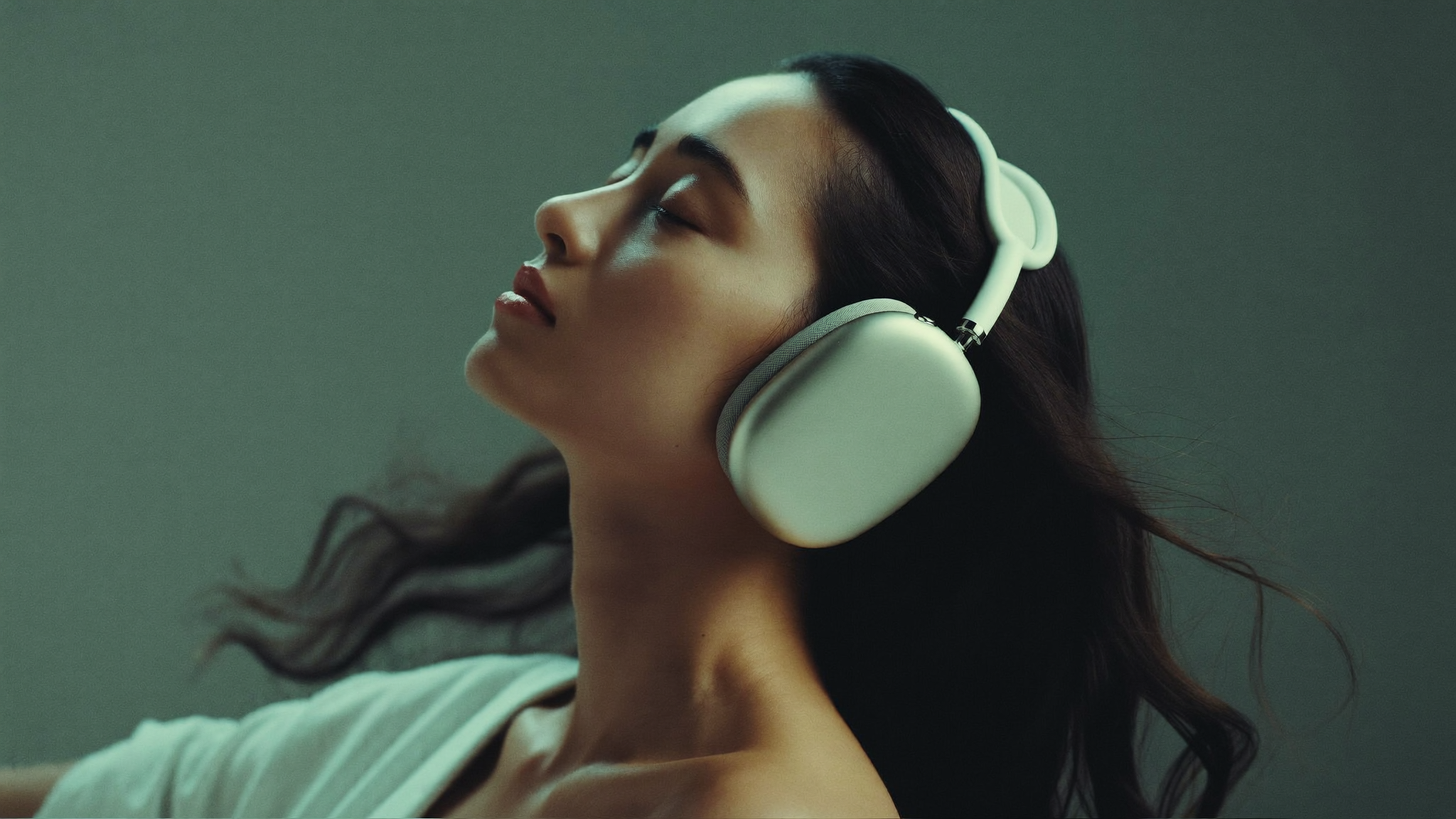
Width: slow movement, not ping-pong
If you are building the session yourself, add movement to the layer above the beat rather than to the beat itself — a pad or a drone that drifts across the stereo field over fifteen or twenty seconds. Slow is the whole trick. A fast left-right bounce is a novelty that pulls attention back and forth; a sweep slow enough that you cannot quite catch it turning is what reads as a hand moving across the back of the head. If you want the movement by itself, the Studio's bilateral preset sweeps a single tone side to side on a 432 Hz carrier.
The 30-Minute Routine
Minutes 0–4: breathe before the beat
Start the breathing before the audio. Four rounds of a 4-4-4-4 count — in four, hold four, out four, hold four — puts you on the bed already slowing, and it costs less than the time most people spend auditioning tracks. The full count is in box breathing for calm. Set your session length now, too, so you are not reaching for the phone later.
Minutes 4–14: 6 Hz theta with music underneath
Headphones on, lights down, 6 Hz theta on a carrier somewhere between 120 and 180 Hz, volume under the sound of the room. Bring the Sleep Music playlist in below it at a level where the music is texture rather than melody — slow, wide, no vocals, nothing with a tempo of its own. Spend these ten minutes doing nothing with your breathing except letting each exhale stretch toward the pace of the swell. This is where the travelling sensation usually shows up first.
Minutes 14–30: drop to delta and stop listening on purpose
Change the beat rate to 2 Hz and lower the carrier if you can. Keep the music where it is or fade it out entirely — many listeners prefer the beat alone from here. Then stop paying attention to the audio and run a slow body scan instead: soles of the feet to the crown, one breath per region, letting the slow pulse set the speed so you stop rushing the legs. Sixteen minutes covers the body once without hurrying. If the file is long enough you will not hear it end, which is the intended outcome.
The no-headphones version
Shared room, sore ears, or a phone across the room: use an isochronic pulse instead. It switches a single tone on and off at the chosen rate, so the rhythm is already baked into the file and survives any speaker. At delta and theta rates it reads as a soft, regular swell rather than a tick. The movement layer is gone, so the effect is flatter than the headphone version, but the pacing is identical — and the playlist on its own still runs the routine perfectly well without any beat at all.
What to Layer Underneath and What to Leave Out
Keep the stack small: one beat, one bed, nothing else. A noise layer earns its place when the room is the problem rather than your pace — the steady rain of pink noise covers traffic and corridor sound that would otherwise keep lifting your attention off the pulse. What does not work is two rhythms at once: a beat plus music with its own tempo, or two beats at different rates, splits attention between them and the massage impression disappears. Words are worse. A vocal line pulls you forward every time, and it is the fastest way to lose a wind-down you had already won.
If you arrive at the bed still wound tight, settle the body before you reach for a frequency. The fast techniques in how to regulate your nervous system work standing up and in under two minutes, and the beat has an easier job afterwards. And if your evenings are the kind where the mind speeds up the moment the lights go off, calming a busy mind at night covers the pattern directly.
A Week to Find Your Own Numbers
Day one is a baseline: the playlist with no beat at all, and one line written down afterwards. Without that line you will credit a beat for things the week was doing anyway. Day two, 6 Hz theta on a low carrier for the full thirty minutes. Day three, the same beat on a brighter carrier above 300 Hz — the carrier is usually what makes a session feel wrong when the rate is right. Day four, 2 Hz delta from the start, lights out, nothing underneath. Day five, your best combination with a slow stereo sweep on the layer above. Day six, the same again at half the volume, which is the adjustment that surprises people most. Day seven, build the shape you will keep: ten minutes of theta, then the drop to delta, then silence. By the end of the week you are not hunting for a track called "brain massage". You have a beat rate, a carrier and a volume, and a playlist that starts in one tap. Our guide to choosing a sleep music frequency covers how the tuning of the music underneath fits around those numbers.
Frequently Asked Questions
What is a binaural beats brain massage?
It is a listener's description of a sensation, not a separate type of recording. When a binaural beat runs slowly enough — generally in delta between 0.5 and 4 Hz or low theta between 4 and 6 Hz — on a low carrier with a wide, slowly drifting stereo layer above it, the pulse stops reading as sound and starts reading as pressure and movement inside the head. Three settings produce it: the beat rate, the carrier pitch, and how far the sound travels between your ears. Any track with those three in the right place will give you the effect, whatever it is called.
Which frequency feels most like a brain massage?
Start at 2 Hz delta on a carrier near 136 Hz for the heaviest, slowest version, and at 6 Hz theta on a carrier between 120 and 180 Hz if you want the same quality while staying awake through it. Those two cover almost everyone. Rates above 12 Hz read as a flutter rather than a sweep, and bright carriers above about 300 Hz float instead of pressing, so both work against the sensation you are after. Change one setting at a time across a week and keep the pair you forget fastest.
Do I need headphones for the effect?
For a binaural beat, yes. The pulse exists only as the difference between what each ear receives, so through a speaker the two channels mix, the difference collapses, and what is left is a drone. Use headphones or earbuds with both sides at equal volume and switch off spatial audio and head tracking, which blend the channels back together. Without headphones, play an isochronic track instead: it switches one tone on and off at the chosen rate, so the rhythm sits inside the file and plays through anything.
Why does it feel like pressure or tingling?
Two things stack. A very slow pulse moves at roughly the tempo of breathing and a resting heartbeat, so attention stops counting it and starts riding it — which is when rhythm registers as something physical rather than as sound. A low carrier adds to that, because tones under about 250 Hz are felt as much as heard, especially in closed-back headphones. The slow stereo drift supplies the direction, and the brain reads the combination of weight, pace and movement as a hand working across the head.
How long should one session be?
Thirty minutes covers the routine above comfortably: four minutes of breathing, ten of theta, and sixteen of delta. Twenty minutes is enough for a daytime alpha reset. For lights out, length stops mattering — use one unbroken file long enough that you never hear it end, rather than a playlist whose track changes will wake you at the wrong moment. Set the length before you start, and finish in silence instead of switching straight to something else.
Can I leave it running all night?
Many listeners do, and the practical considerations are comfort rather than frequency. Keep the volume low, use flat or soft earbuds you can lie on, and favour a single long file so nothing changes abruptly at two in the morning. If headphones in bed are the thing that keeps you awake, switch to an isochronic pulse or the playlist alone on a quiet speaker and keep the same pacing — ten minutes of slow theta, then the drop into delta.